Emergency Management — 2024
2024 Fourth Annual Wildfire Evacuation Exercise
Design consulting and strategic creative solutions for the La Plata County Office of Emergency Management’s annual week-long emergency management simulation exercise—a collaborative training event bringing together 32 county agencies to practice the procedures in place for fire response.
“Our mission in the Office of Emergency Management is to save lives and protect the community. To do this, we focus on 5 themes of Emergency Management: Prevention, Mitigation, Preparedness, Response and Recovery. We incorporate all of these into the annual exercises to provide a realistic training opportunity that helps prepare all of us to effectively and efficiently accomplish our mission.”
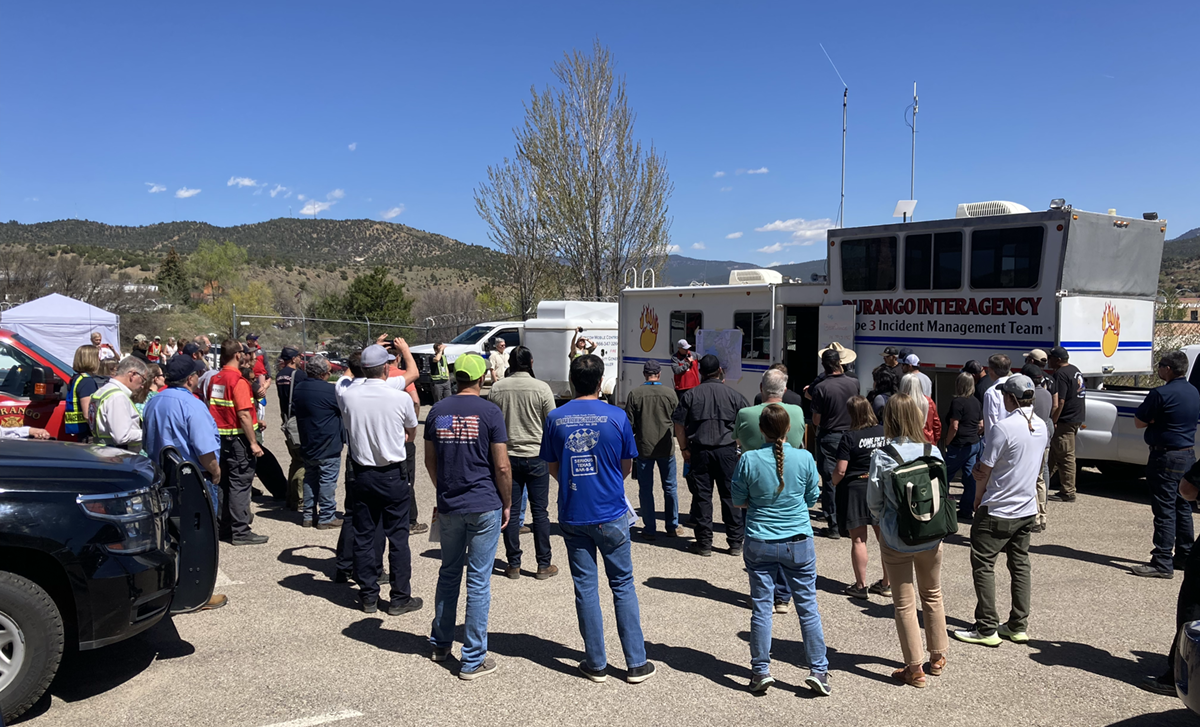
The goal of this exercise is to help prepare local and state agencies as well as the public for a fire emergency response. This is accomplished by providing realistic, scenario-based exercises that involve fires that are reported to have “large fire potential” and threaten structures. Law enforcement and fire departments respond as they normally would, and request activation of the EOC (Emergency Operations Center). Members of the Incident Management Team respond to the EOC, and begin their roles, including establishing a “common operating picture,” incident support, community alert and warning (evacuation orders), financial procedures, press releases, and multi-agency coordination.
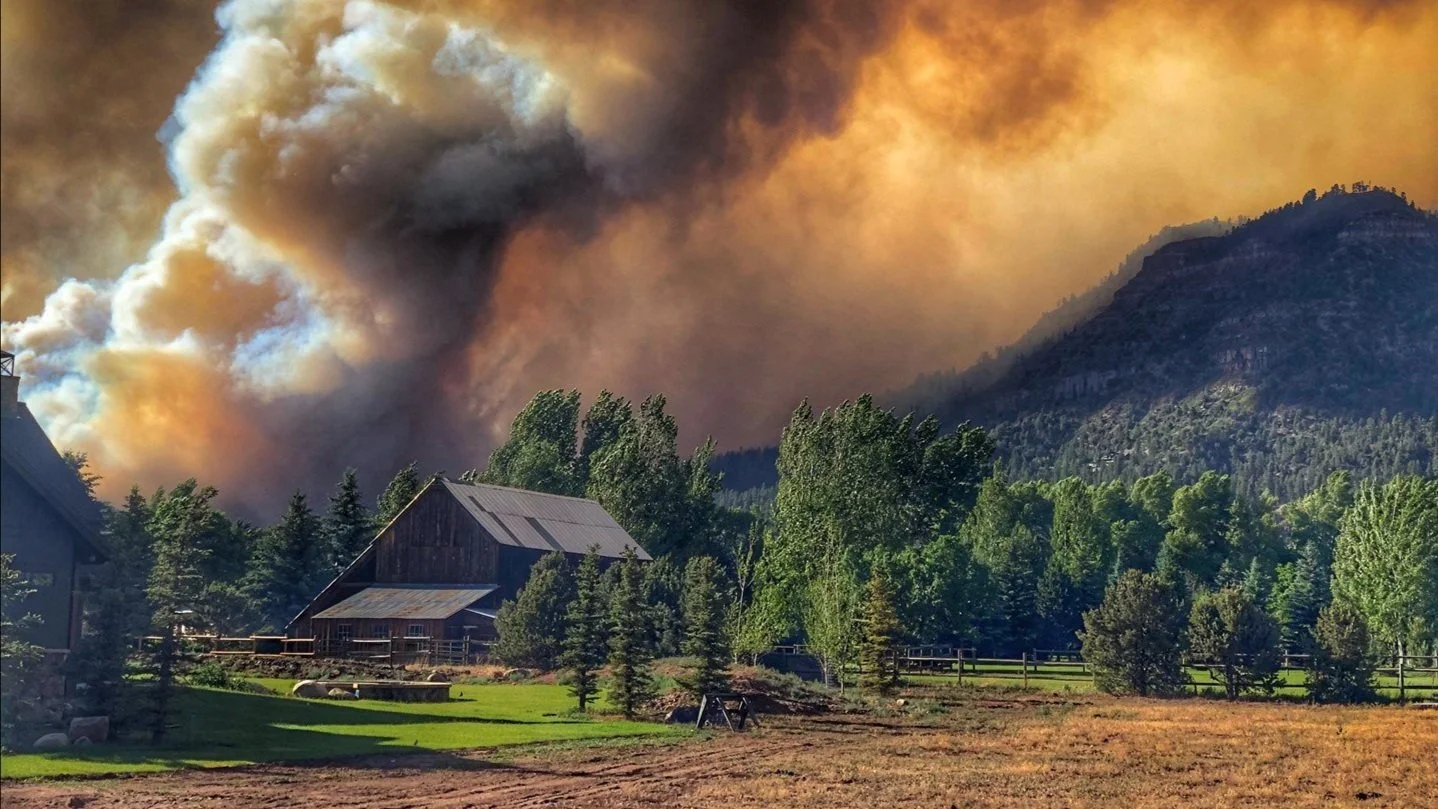
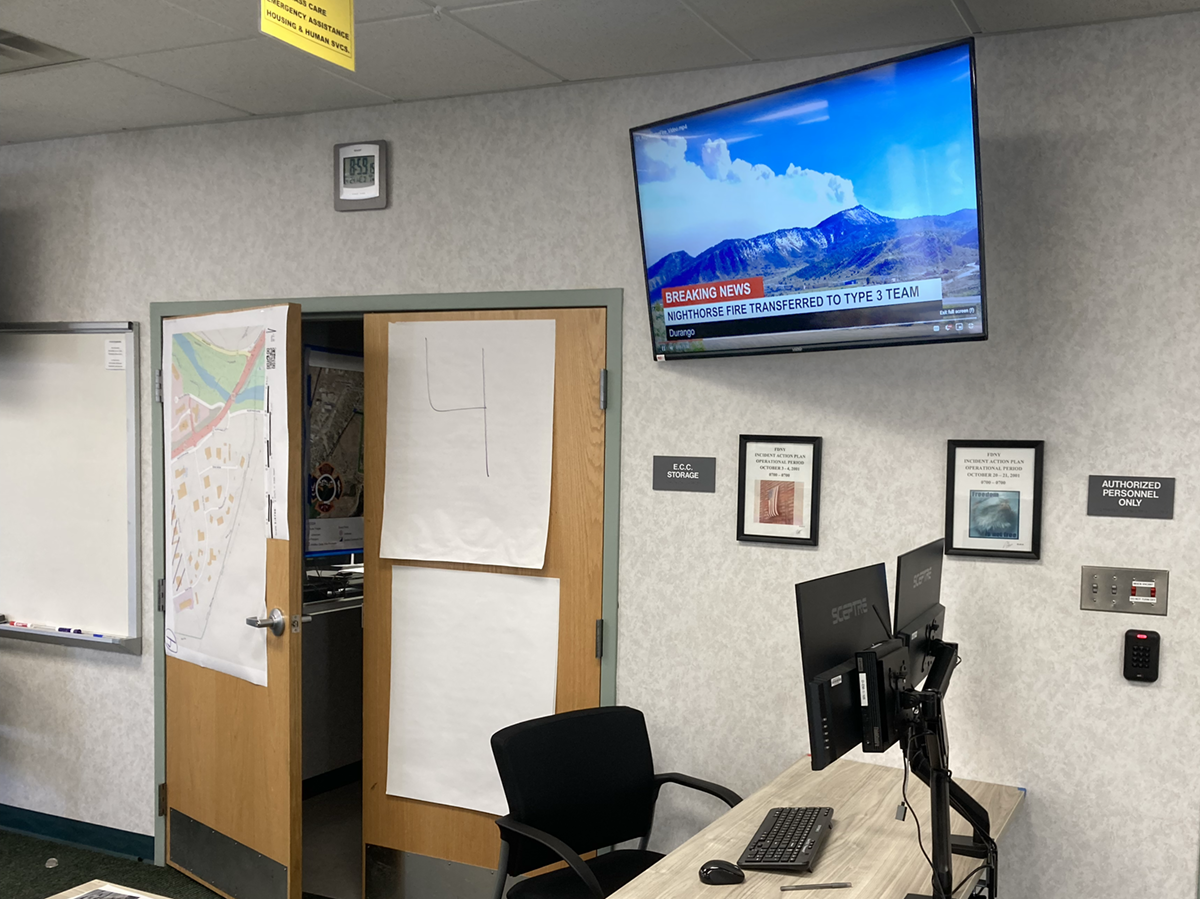
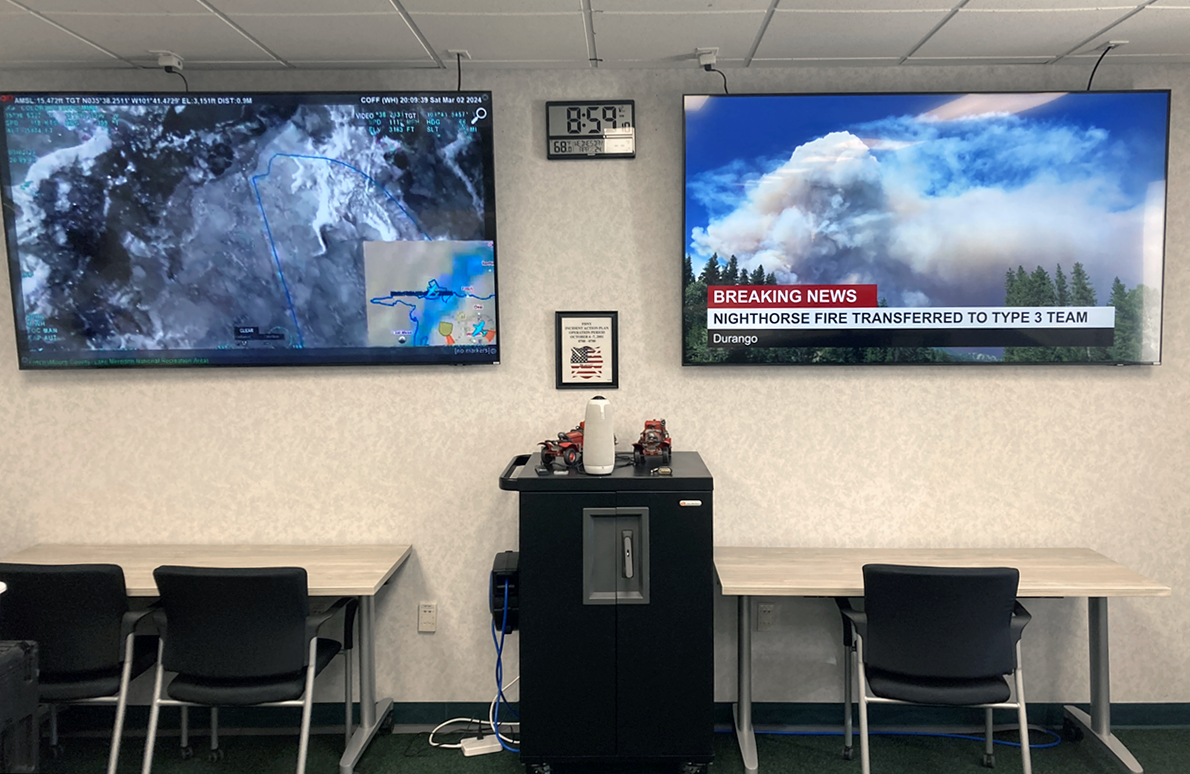
I created a series of simulated breaking-news chiron videos, representing three stages of the simulated “Nighthorse Fire.” The scenario had this fire transition from the domain of a smaller, Type 5 management team to a Type 3 team. This team assembled at the EOC for a briefing and to discuss multiple “Values at Risk” in order to develop the Incident Response Plan. The parties involved in the discussions included the Bureau of Indian Affairs, the Southern Ute Indian Tribe, Colorado Department of Parks and Wildlife, the City of Durango, Colorado Department of Fire Prevention and Control, and Durango Fire Protection District.
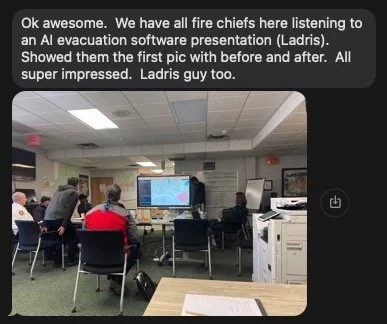
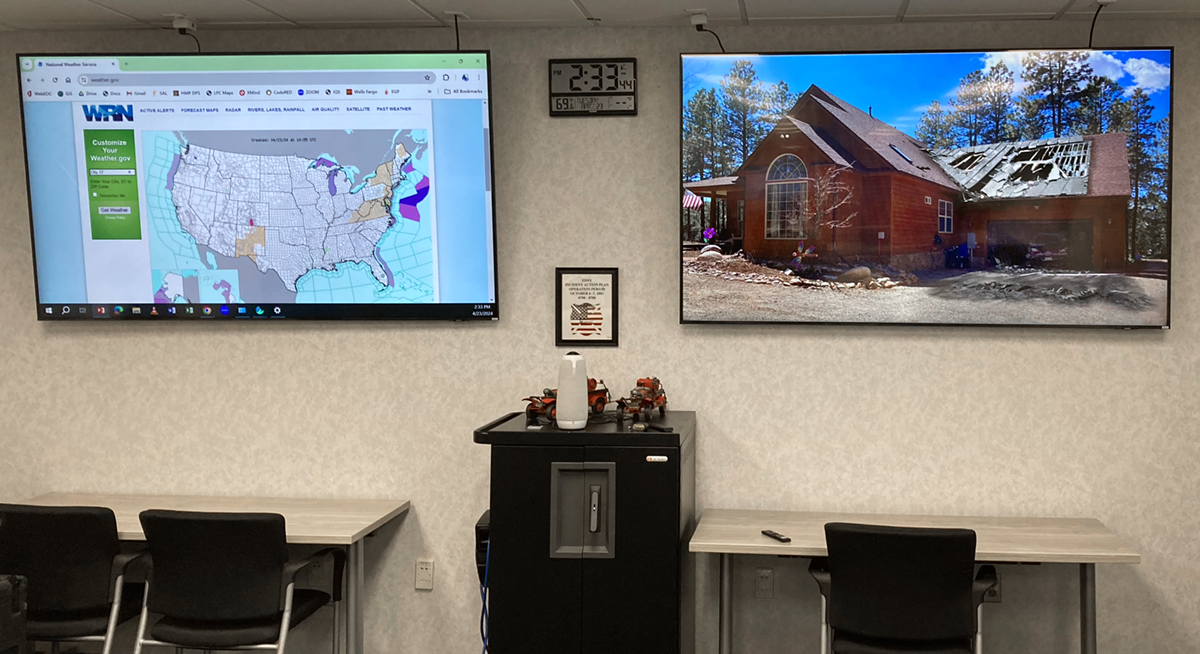
This fire grew very large, very fast, threatening the Bodo Industrial Park. Evacuation orders were issued for the Bodo area, and representatives from all businesses in the area were invited to the EOC to discuss what a real evacuation would entail. This provided a great opportunity to impress on the business owners and occupants the importance of emergency preparedness plans, and gave them an opportunity to see the EOC in action. Video simulations of the fire approaching the area were displayed on multiple monitors in the EOC, and provided a great degree of realism and a sense of urgency.
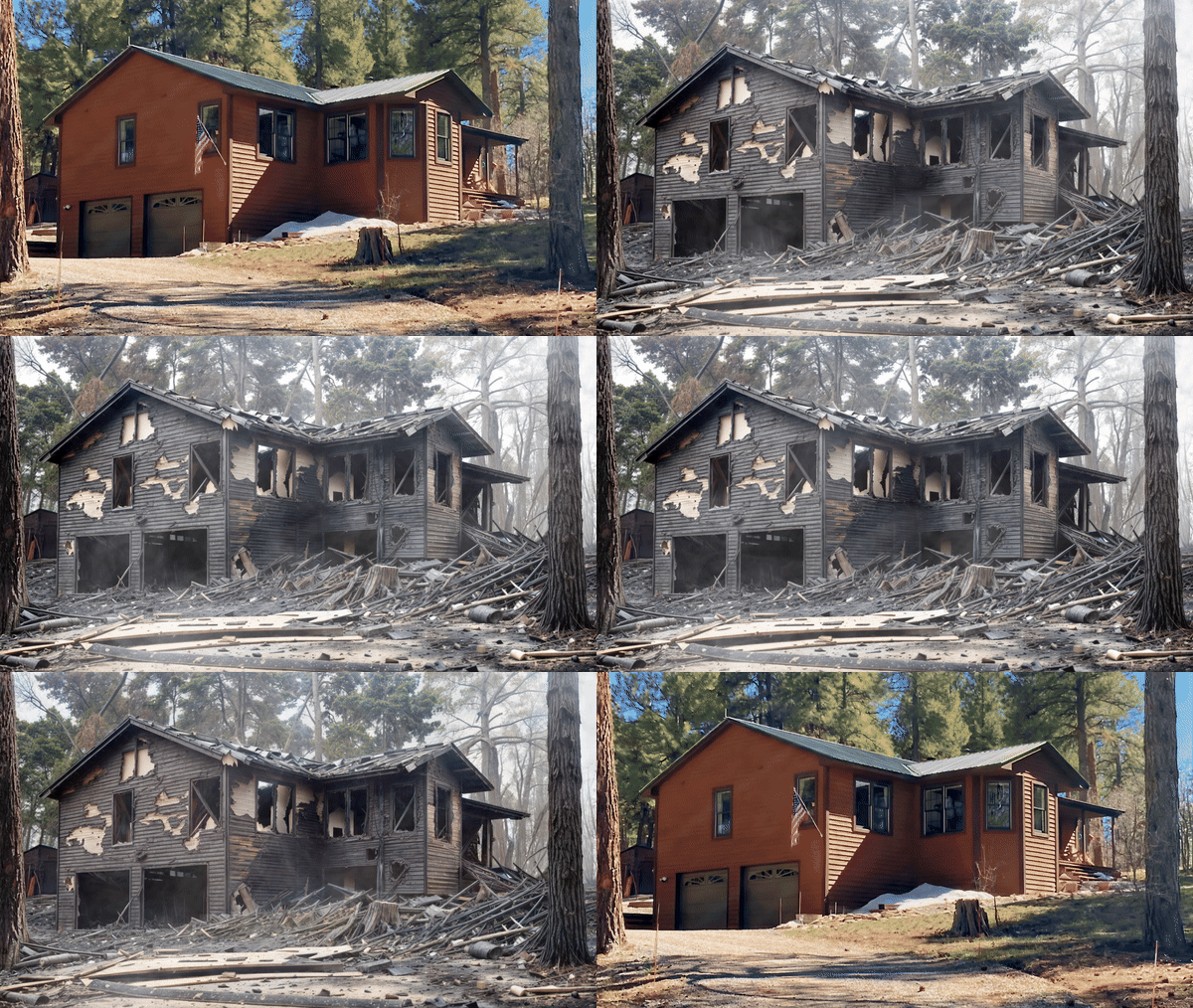
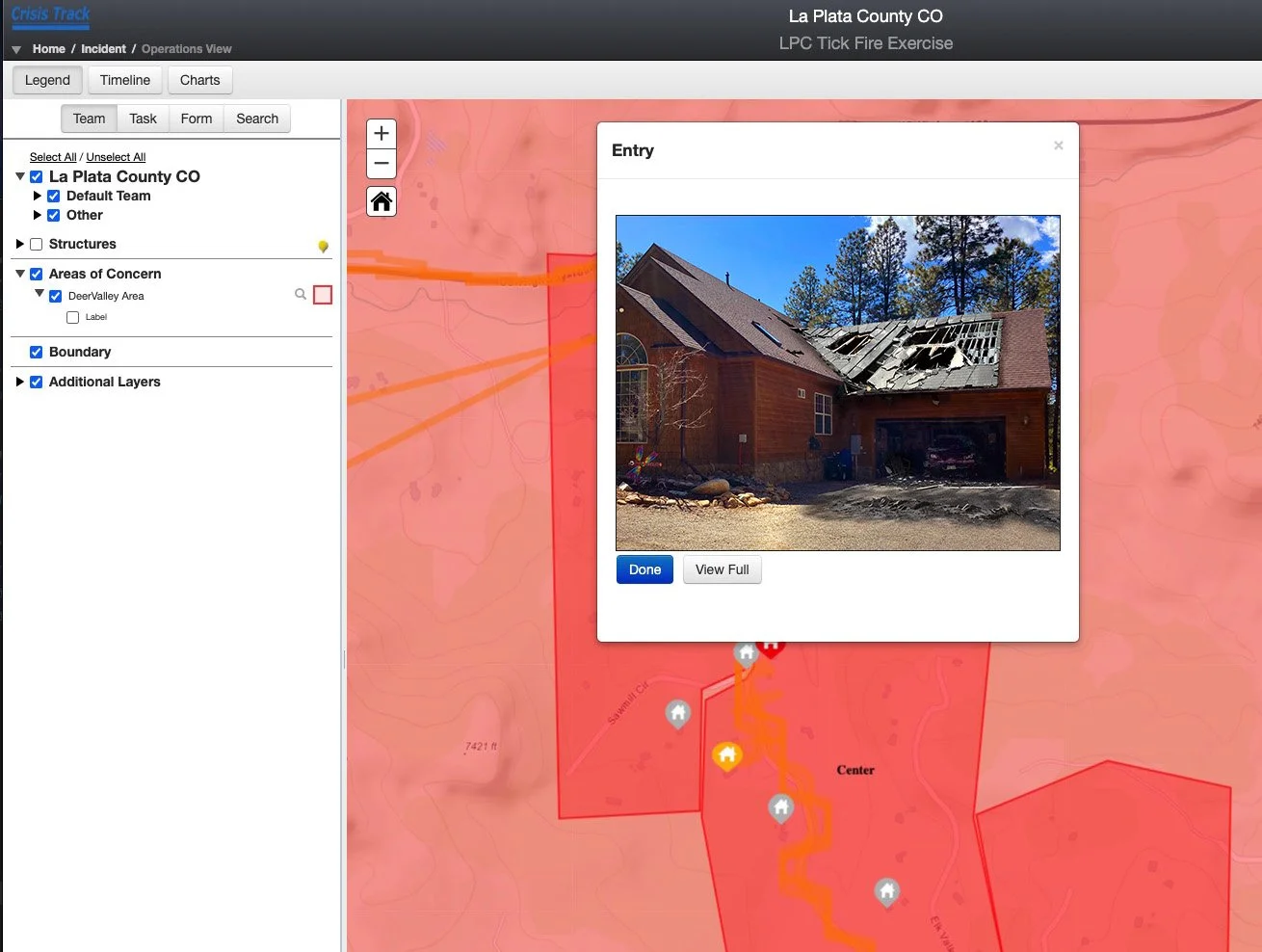
For this scenario, in addition to the fire suppression and residential evacuations, the focus was on the damage assessment process. The Colorado Department of Homeland Security and Emergency Management (DHSEM) recently rolled out a new program called “Crisis Track,” which is used as a portal for homeowners who have had homes damaged or destroyed in a fire. Local building inspectors go into fire areas post-fire, to conduct the damage assessments using Crisis Track on smart phones and tablets.
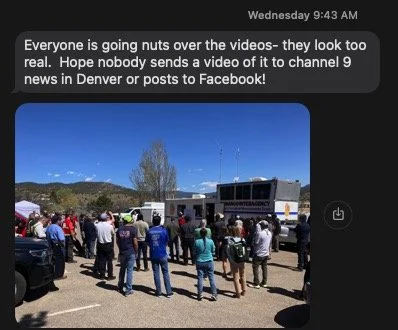
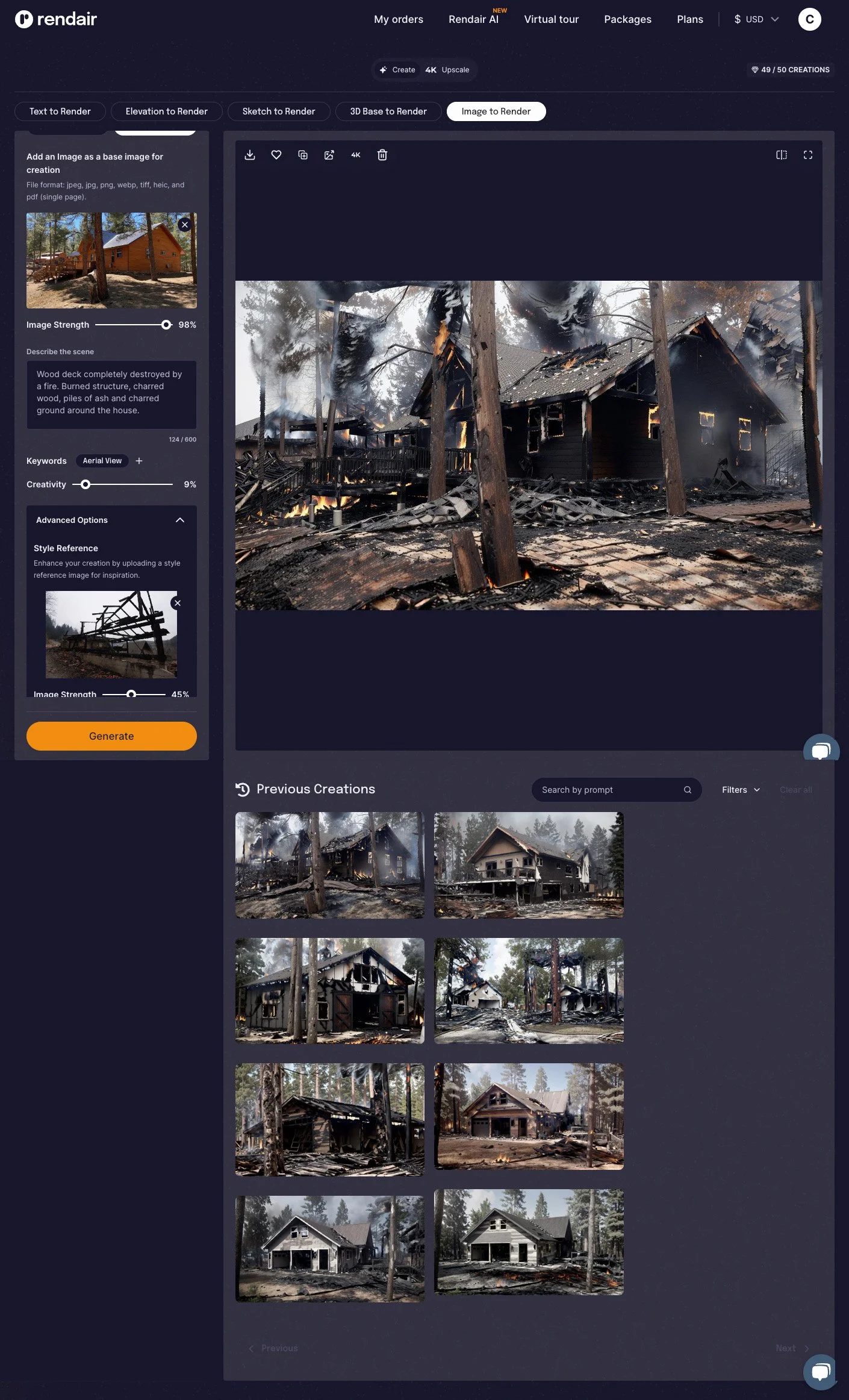
In order to make this more realistic, I leveraged several generative AI apps to produce various levels of fire damage to the selected structures and surrounding areas, followed by much compositing for each image. The final images were laminated and posted on a stake in front of the property. The damage assessment team could then use the program to capture information about each property. The Crisis Track program was pre-loaded with information from the La Plata County Assessor’s office, so all the information pertaining to the property, including owner information, assessed value, and level of damage could now be streamlined to assist the residents through the recovery process.
“The realistic pictures were of great value to the assessment team as they worked through the program.” –– Shawna Legarza, Director of Emergency Management
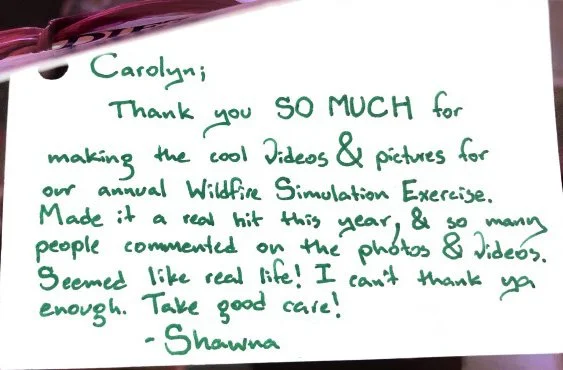
My creative goal for the visuals supporting this fire evacuation training simulation was simple: “As real as it gets.” This high standard was inspired by my experience at Microsoft in their simulation games group, where realism drove both engagement and effectiveness. By applying that philosophy, I elevated the client’s event experience to a level where participants’ emotions mirrored those of a real-world emergency evacuation. This is the essence of simulation training—not just building ‘muscle memory’ but making intense emotional responses feel familiar and manageable. The positive feedback from the client and participants affirmed the success of this approach, underscoring the value of design in creating impactful, immersive experiences.