Cavrnus
As Director of Product Design at Cavrnus, I led the experience design practice for an ambitious real-time multi-product platform built around drag-and-drop collaboration for Unreal Engine and Unity environments. The platform spanned 2.5D, spatial 3D (AR, VR, and MR), voice, video, data integration, and spatial persistence, with all interactions logged and synchronized across sessions through Cavrnus's proprietary Journal system.
Designed for creators, brands, and developers, the platform required cohesive, purposeful design across 17 distinct endpoints: streaming, web, PC and Mac applications, iOS and Android mobile and tablet devices, and the full range of current XR headsets. Flexible deployment options, from hosted cloud to on-premises enterprise configurations, added another layer of complexity to an already expansive design surface.
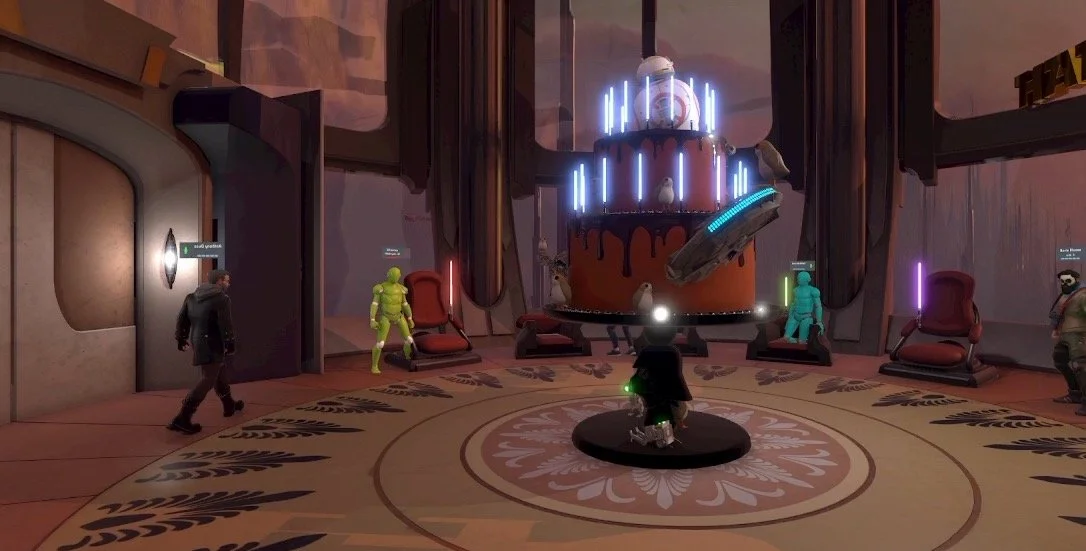
A Skunkworks Birthday in VR
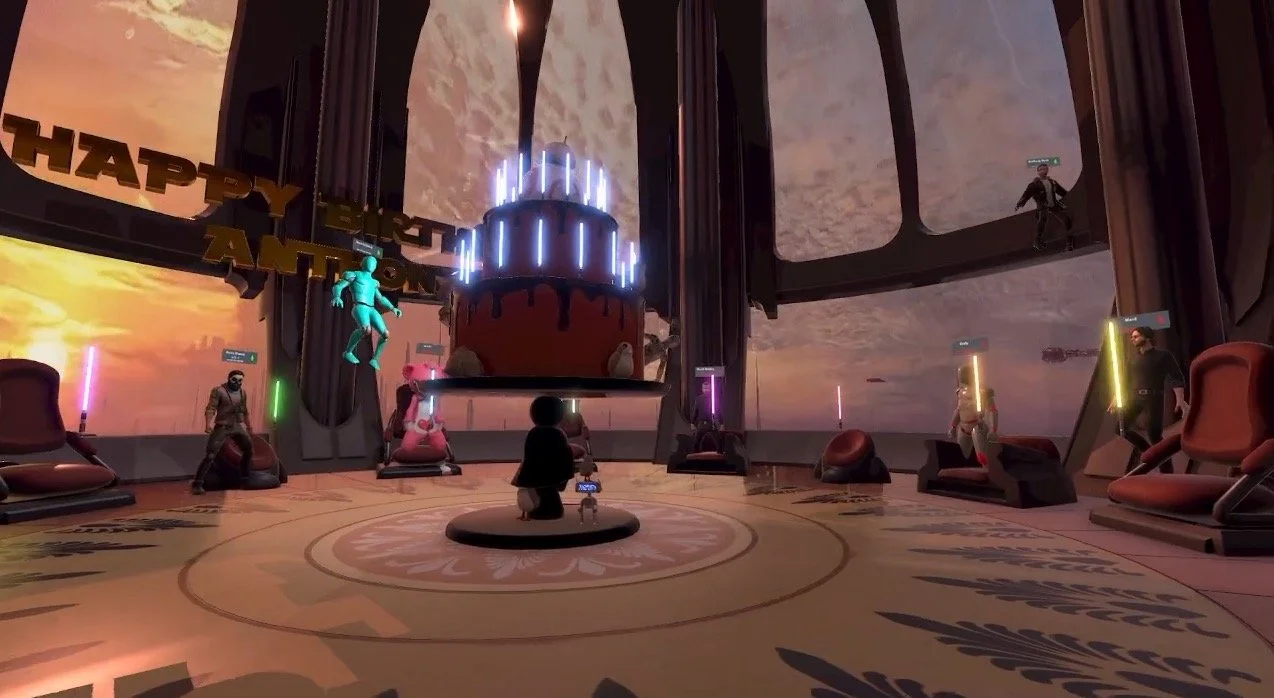
When Cavrnus founder Anthony Ducca's birthday approached, I decided to do something the platform had never seen before: throw him a surprise party in VR.
The project was entirely after-hours and off the books. Over roughly eight days, four of us pulled together a fully realized Star Wars-themed (his favorite) world built around the Jedi Council chamber, complete with a custom-designed 3D birthday cake as the centerpiece. I secretly PM’d the project and led the concept, coordinated the collaboration, and sourced and created original 3D assets. Mark, our Unreal developer and Holoscript expert, built the interactive reveal sequences, each triggered by a single button press. Boris, our technical artist, brought the space to life with animations. Connor, our senior Unity developer, added the finishing touch: interactive lightsabers at every seat.
Anthony was genuinely surprised. The world resonated so strongly that he adopted it as a featured demo environment, using it to show prospective customers and partners what the Cavrnus platform could do.
"Thank you so much for coordinating this. It was great on so many levels. It was a great example of what our platform can do. Birthdays in the metaverse is such a great real-world use case. It's the coolest space yet!" — Anthony Ducca, Founder, Cavrnus
Jedi Council environment and Star Wars models sourced from Sketchfab.
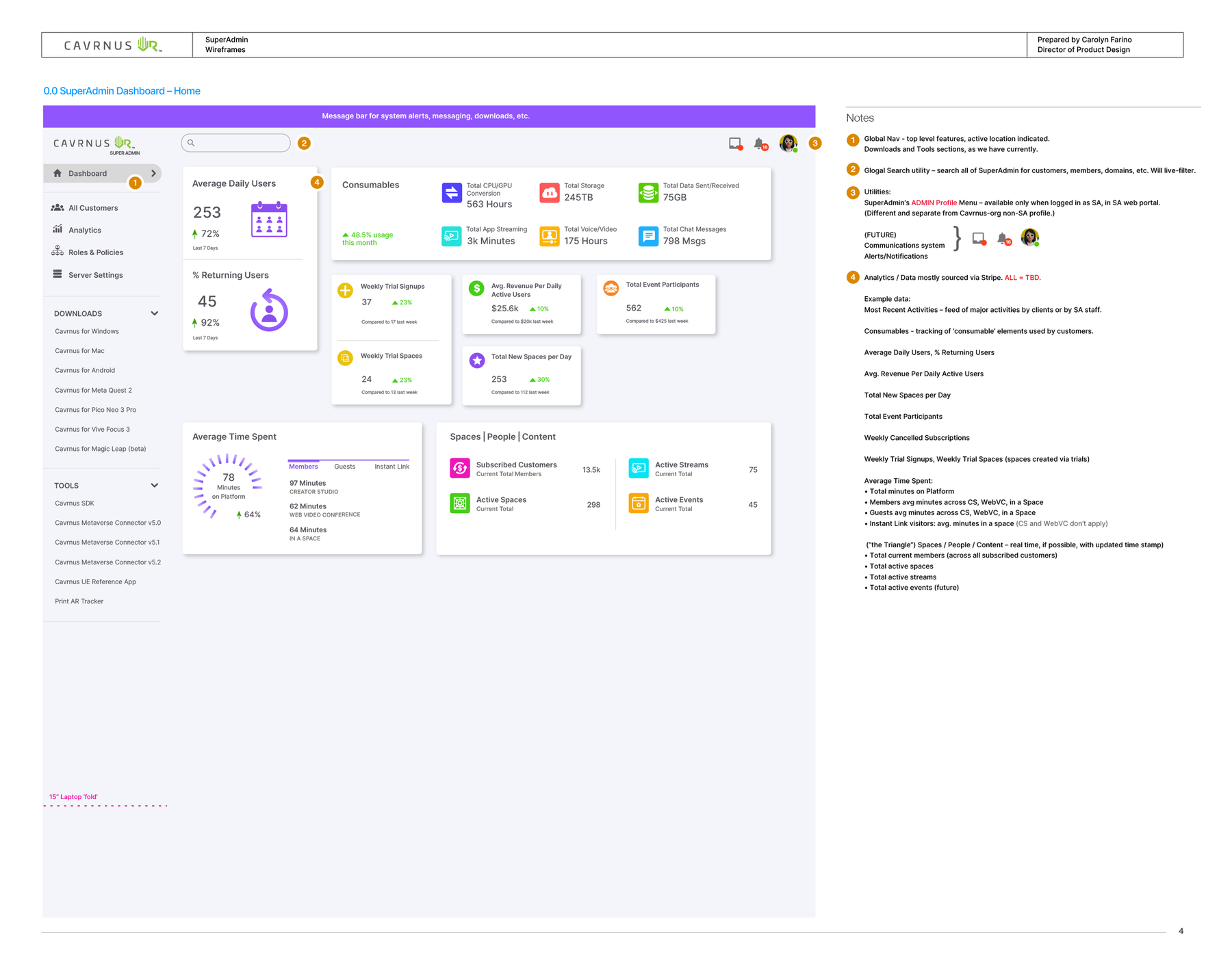
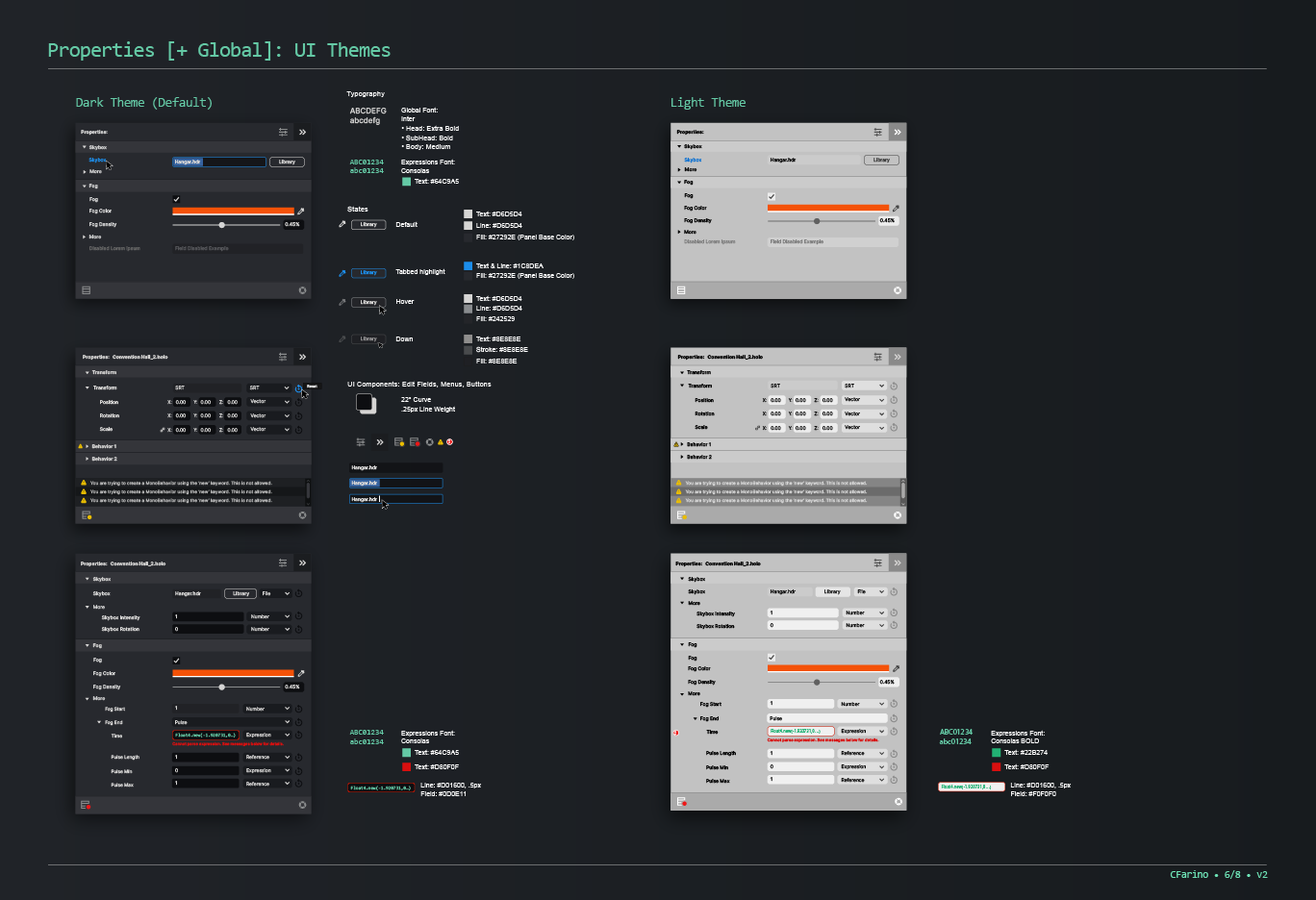
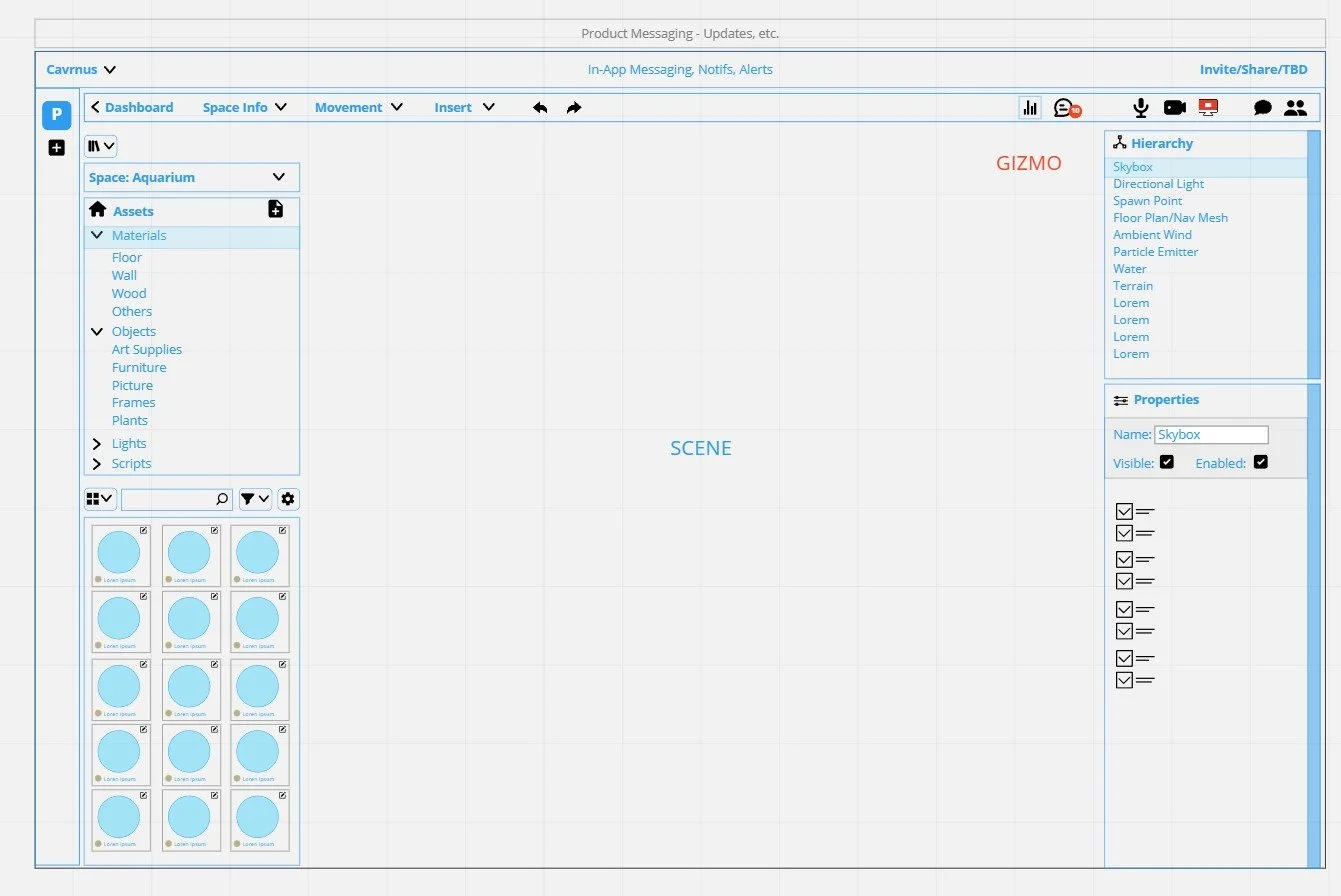
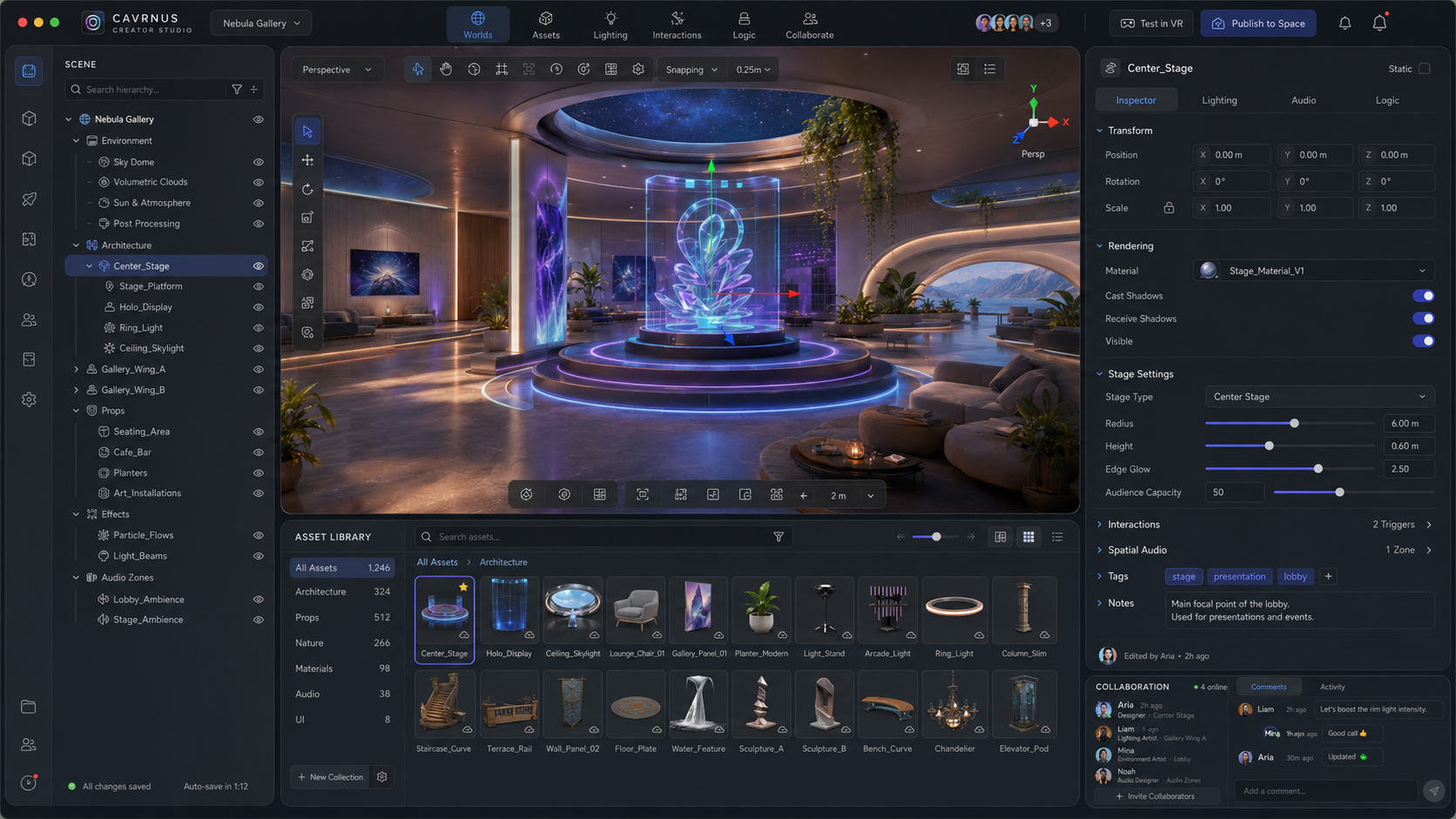
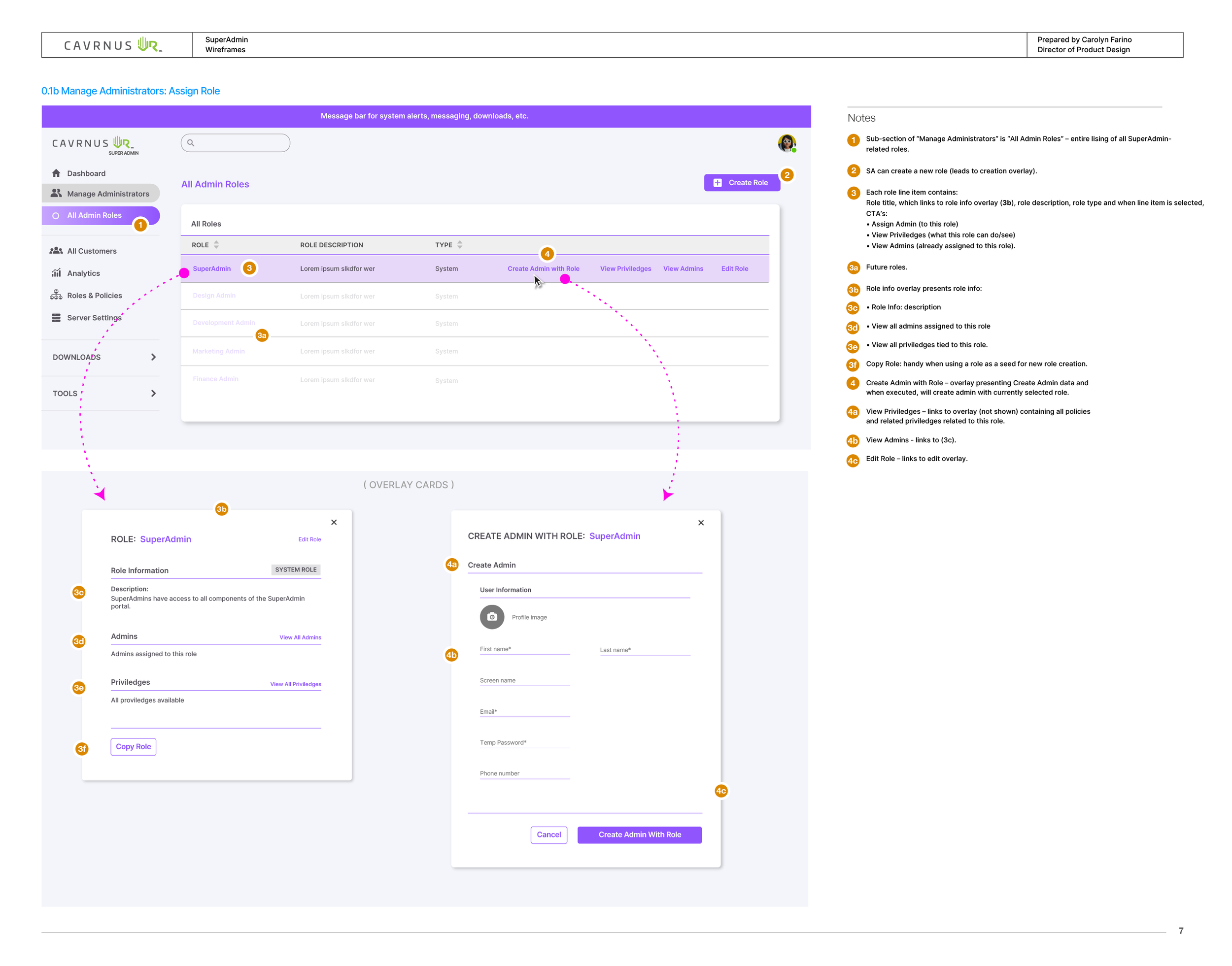
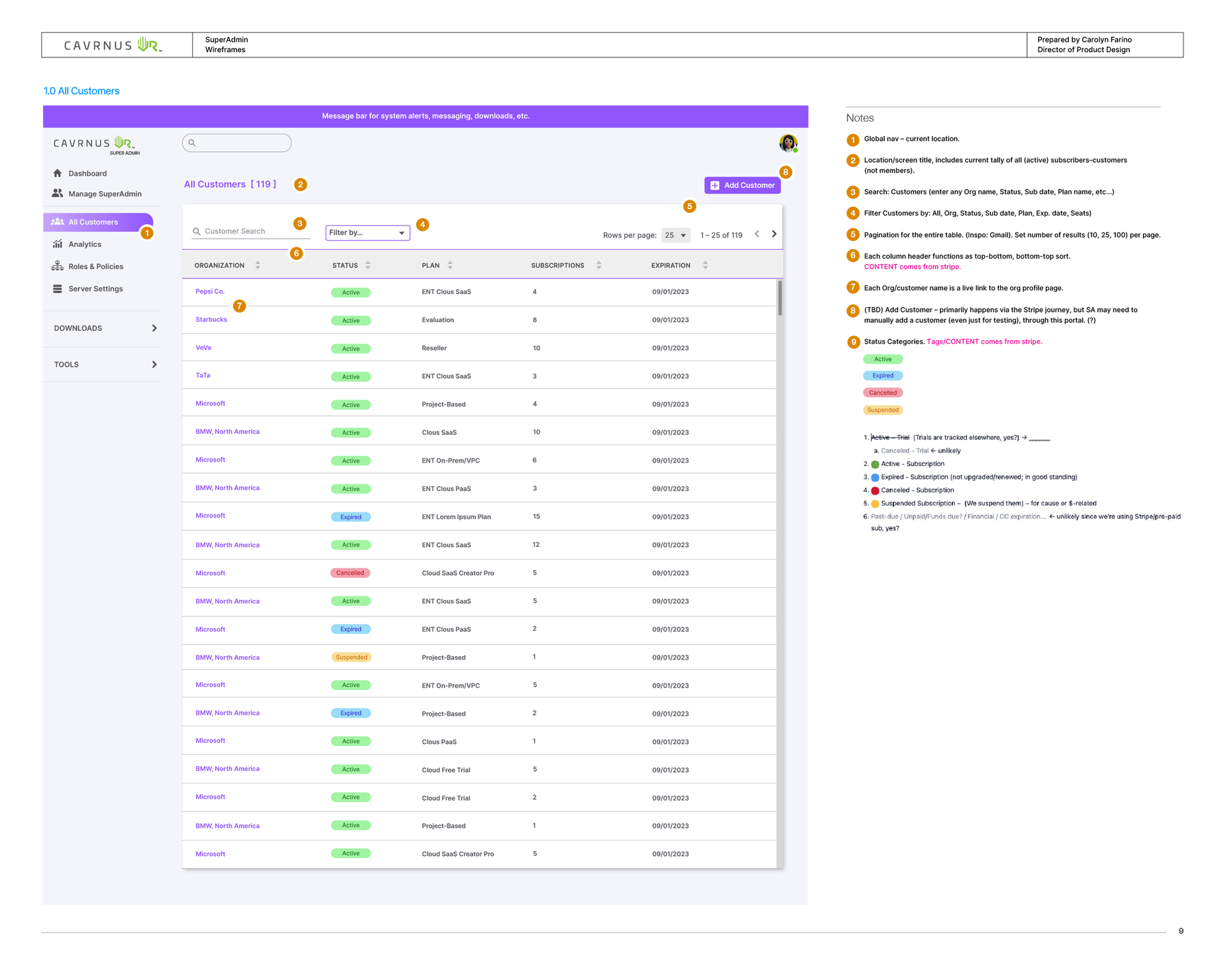
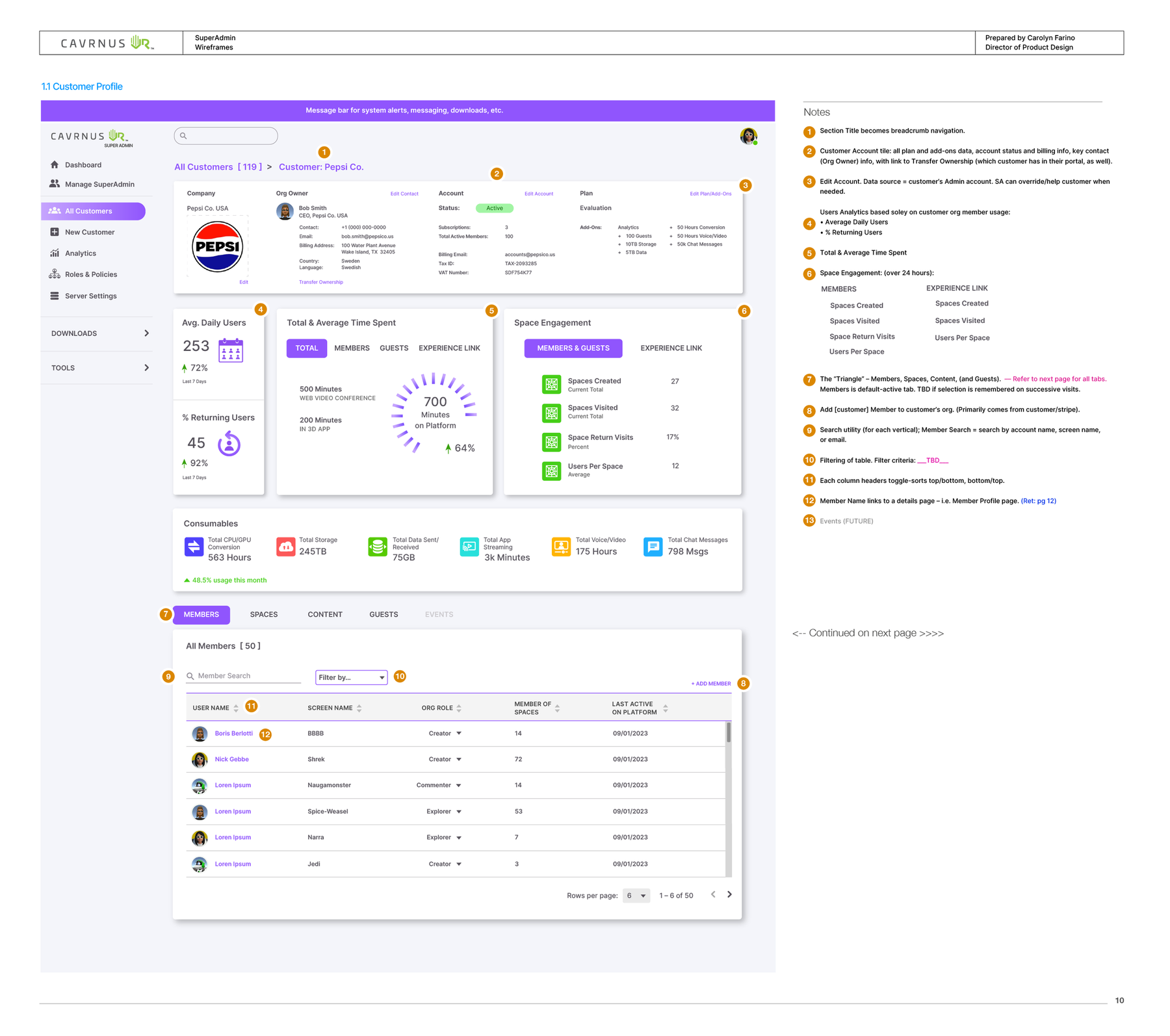
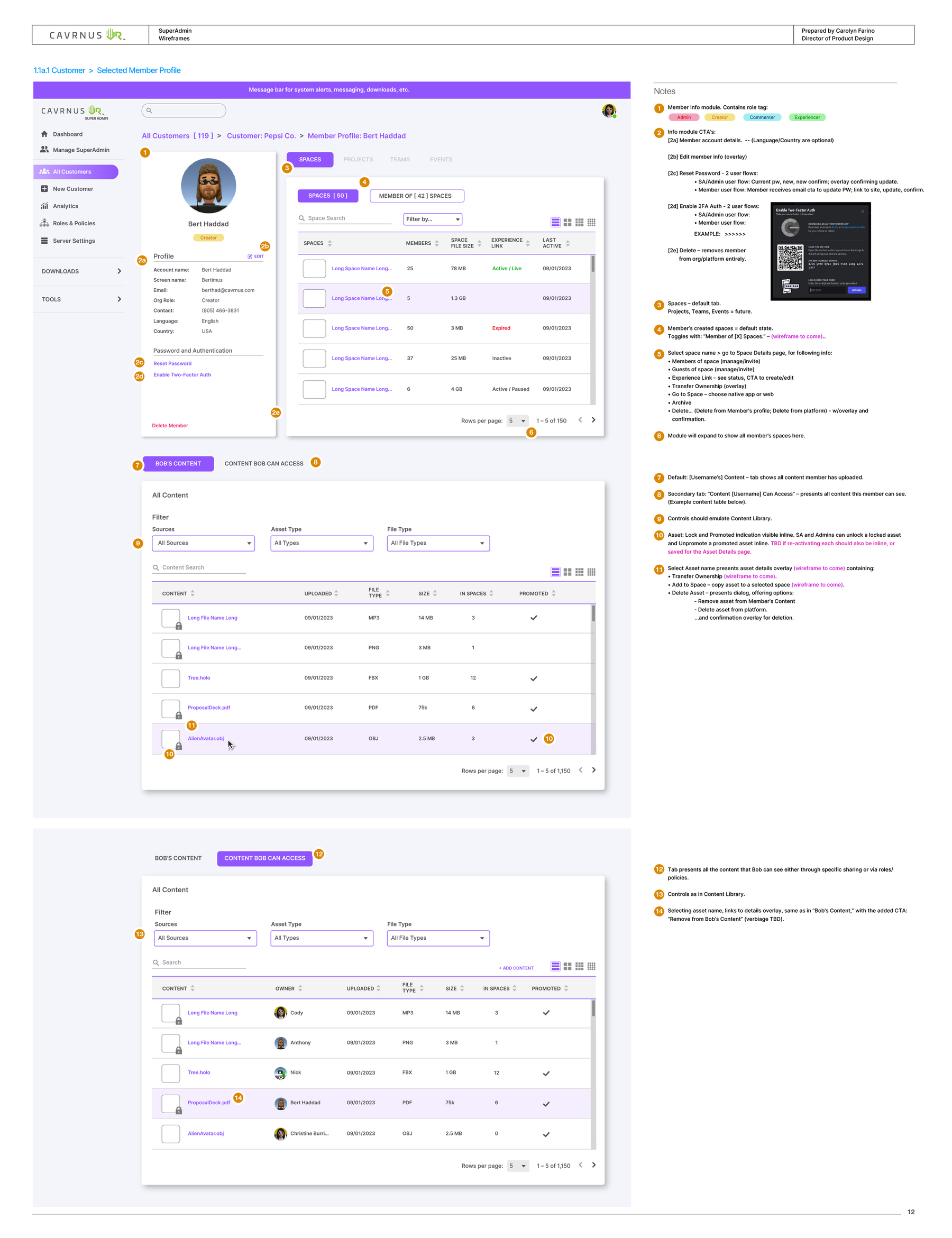
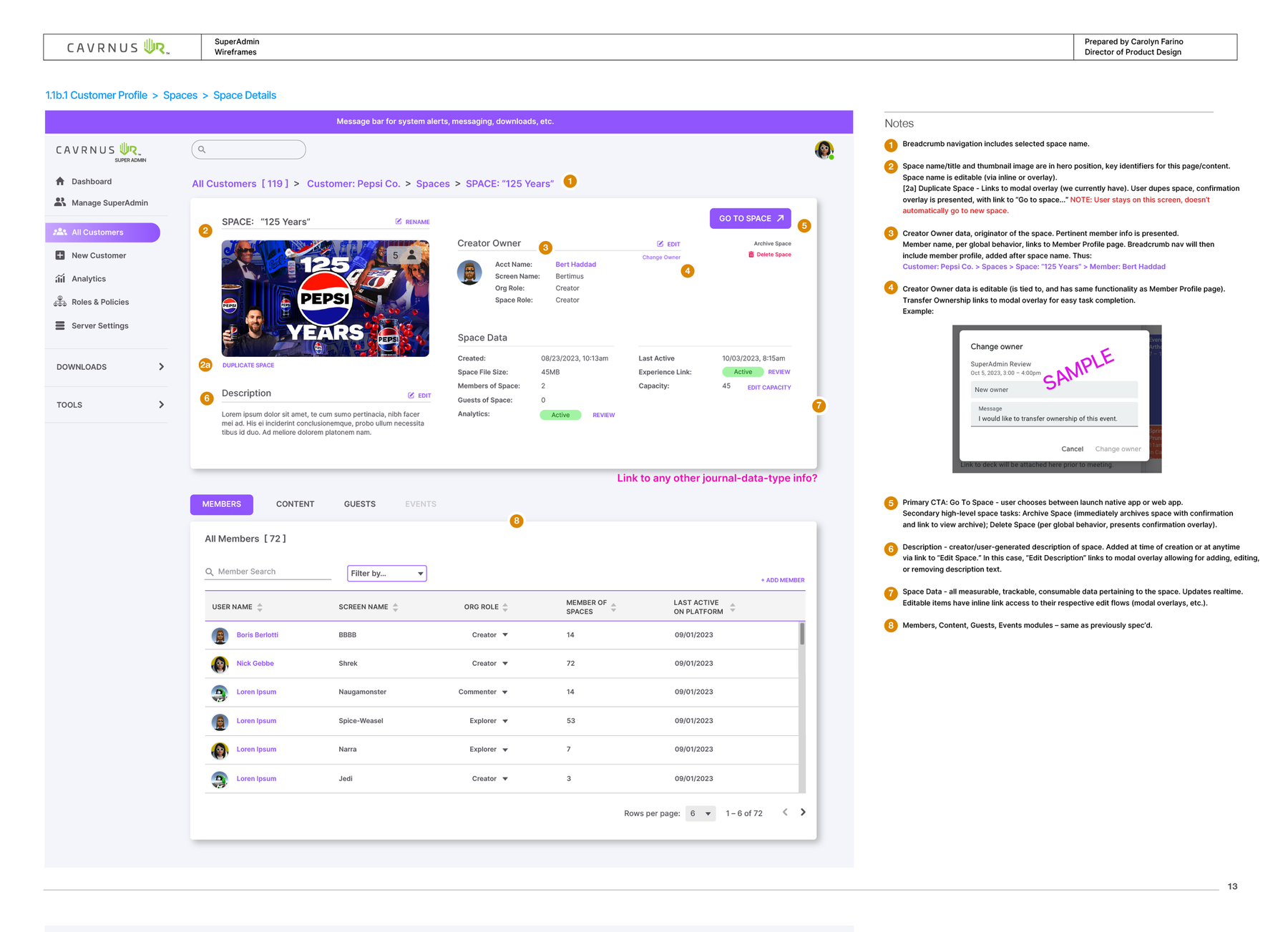
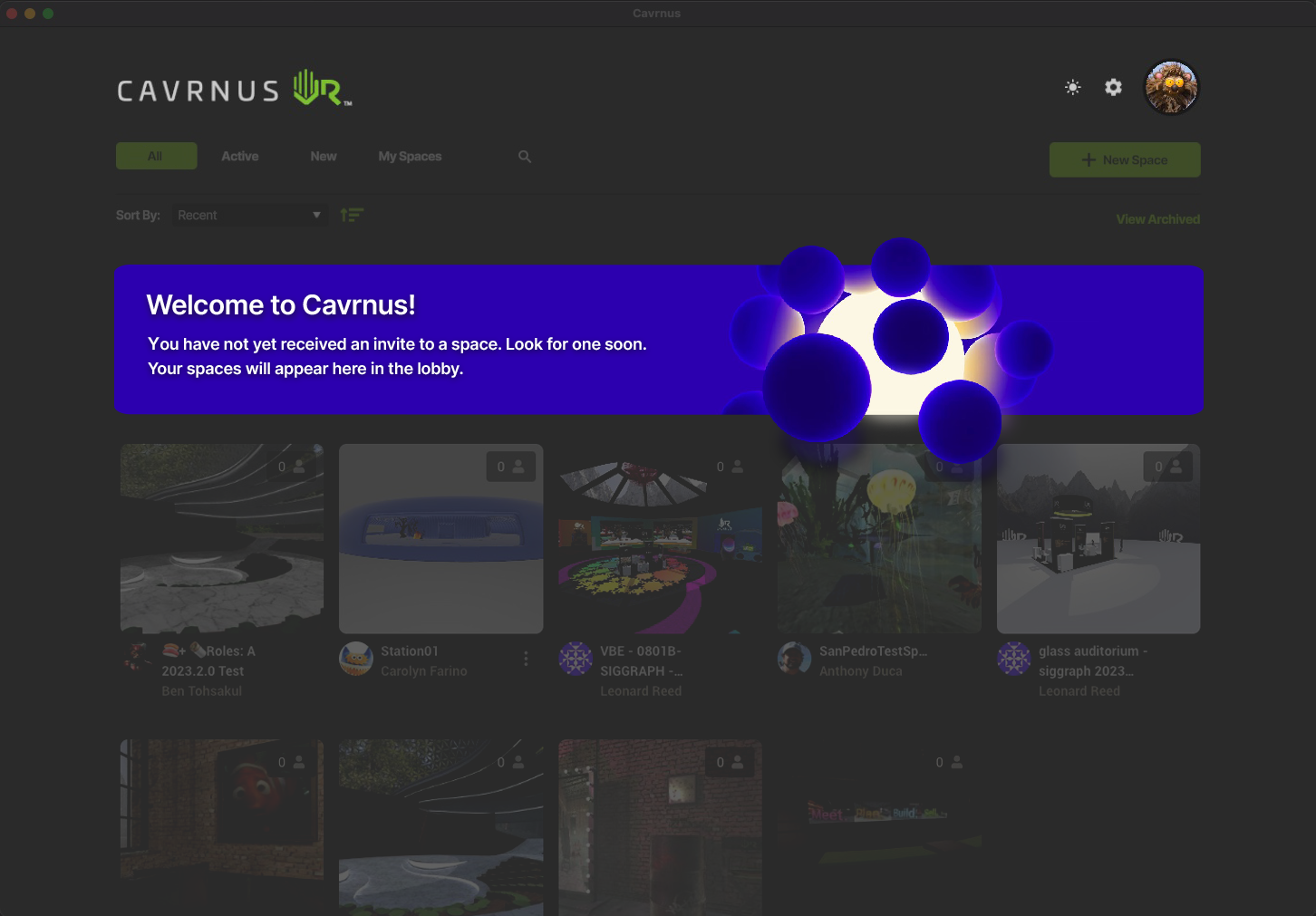
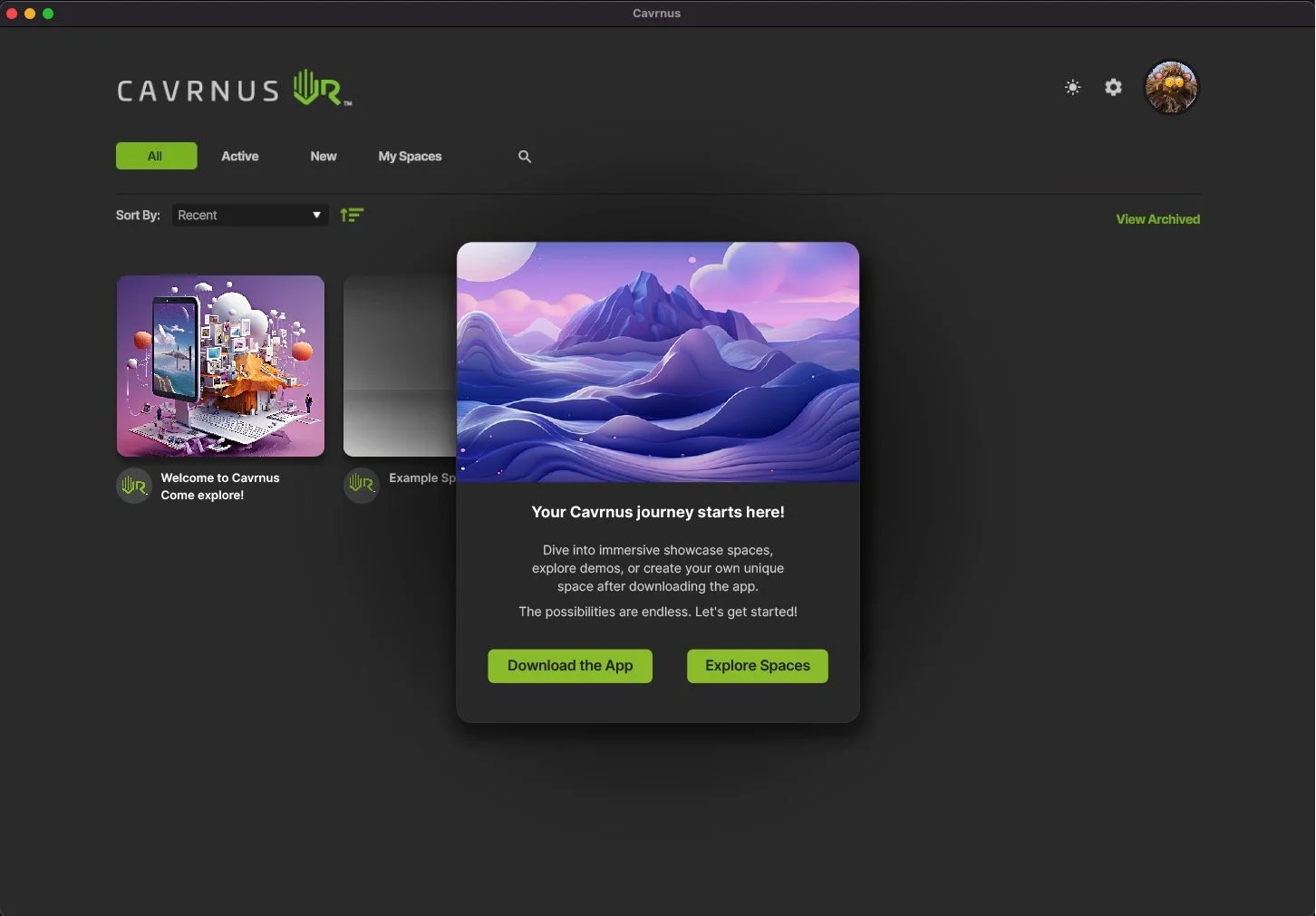
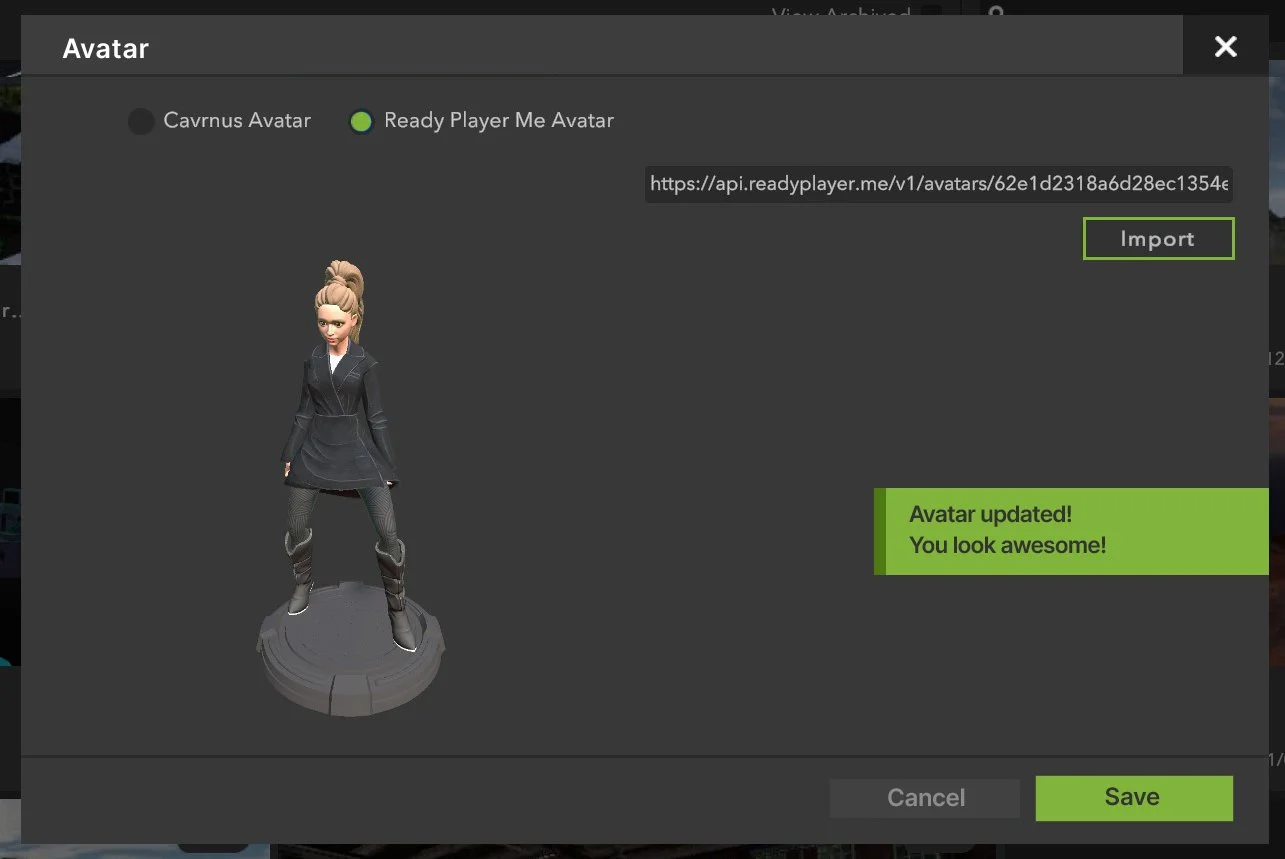
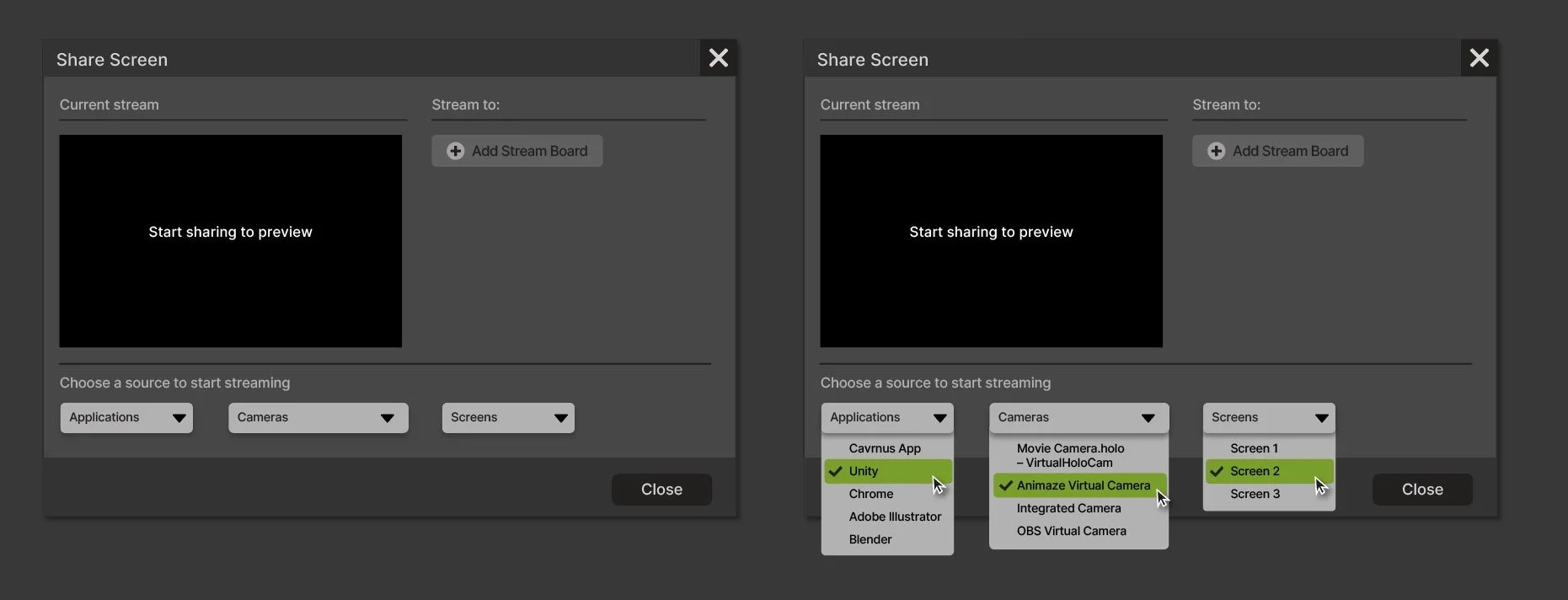
The UI shown in these wireframes reflects the React-based design system I began customizing for our product. While our team was fully invested in Vue.js at the time, I recognized early signs, despite not being a developer, that it wouldn’t scale with our long-term roadmap. I brought this concern to the VP of Product and our lead developer, sparking a deeper evaluation. After further research and discussion, we aligned on a plan to begin migrating to React.
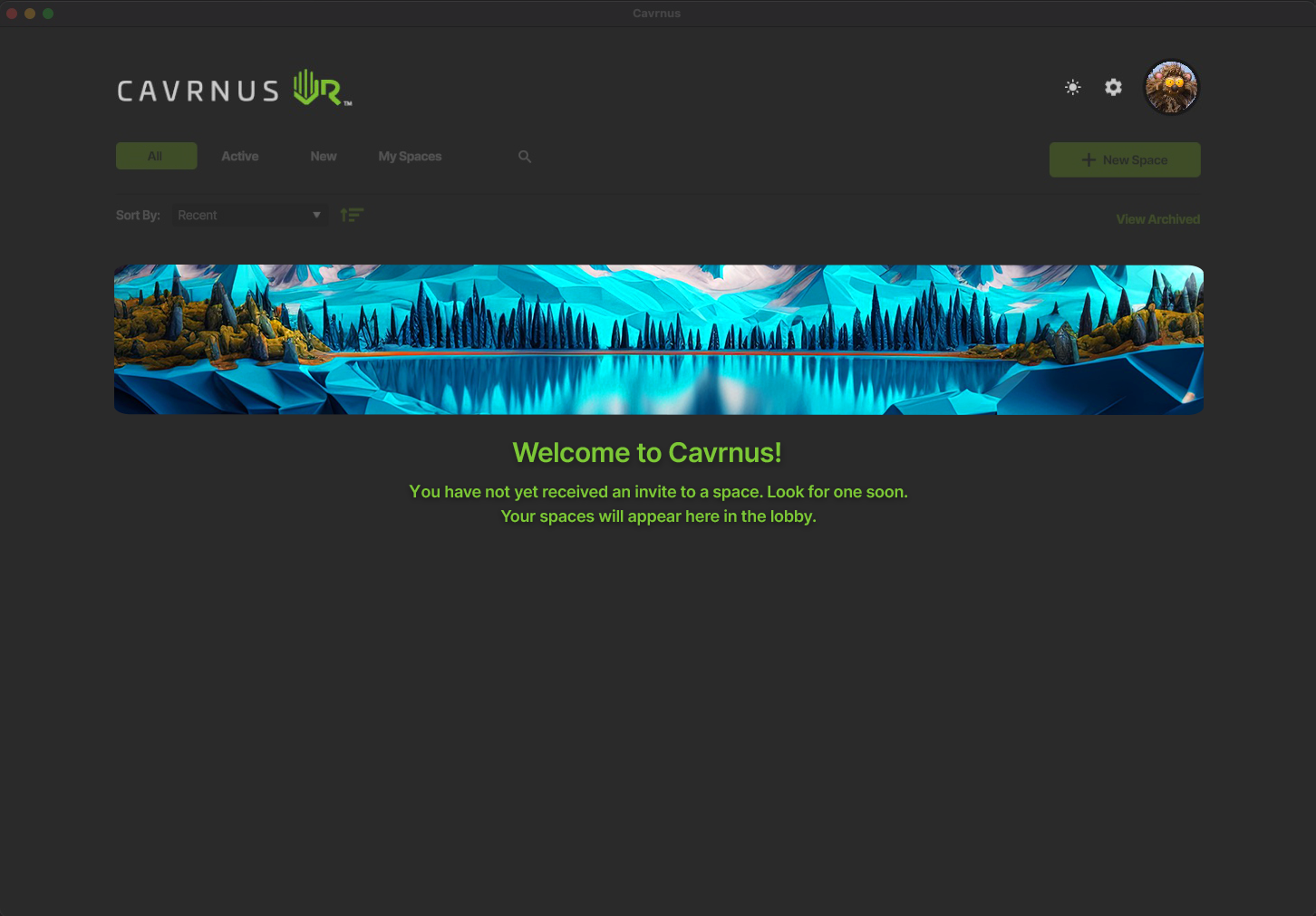
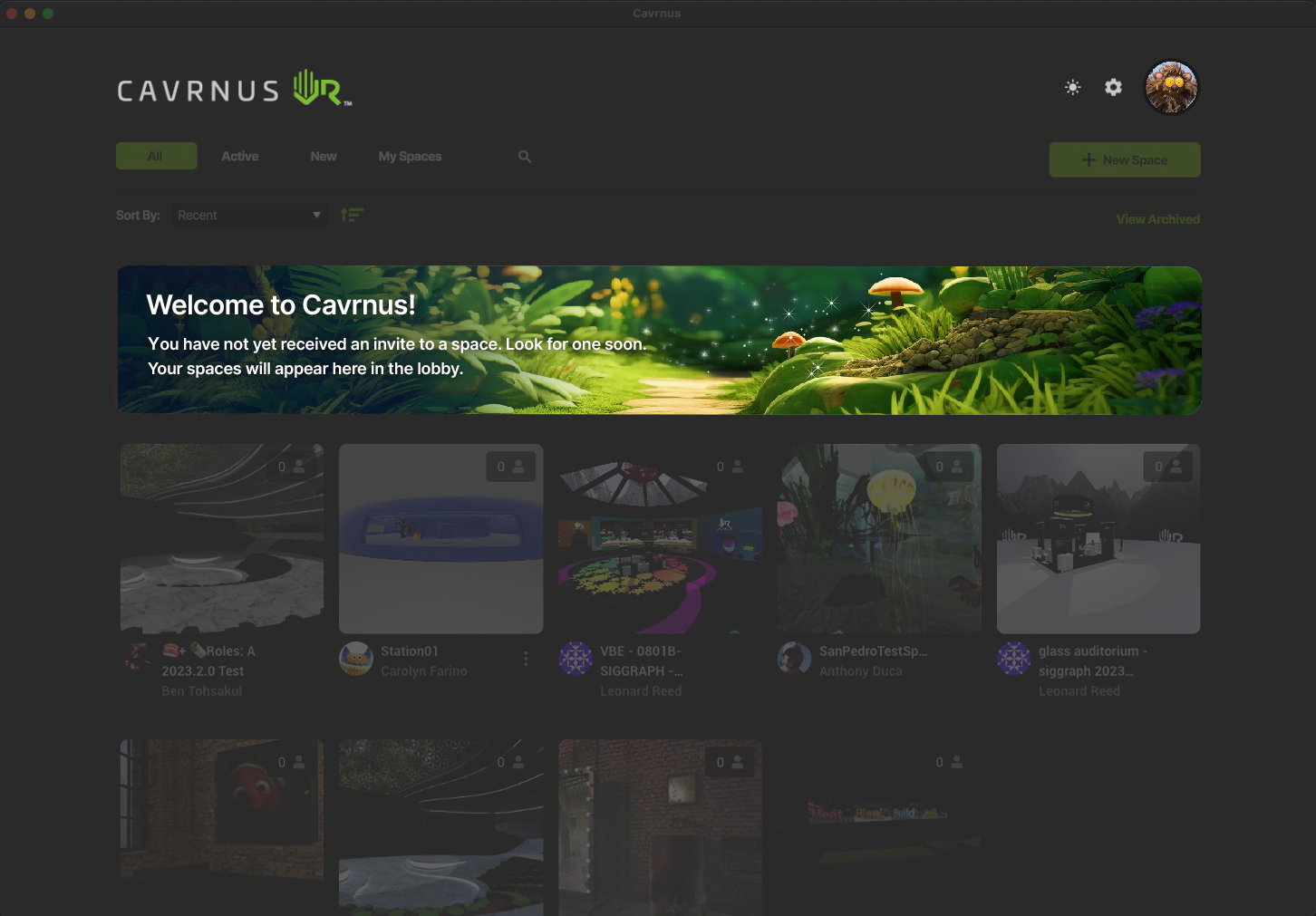
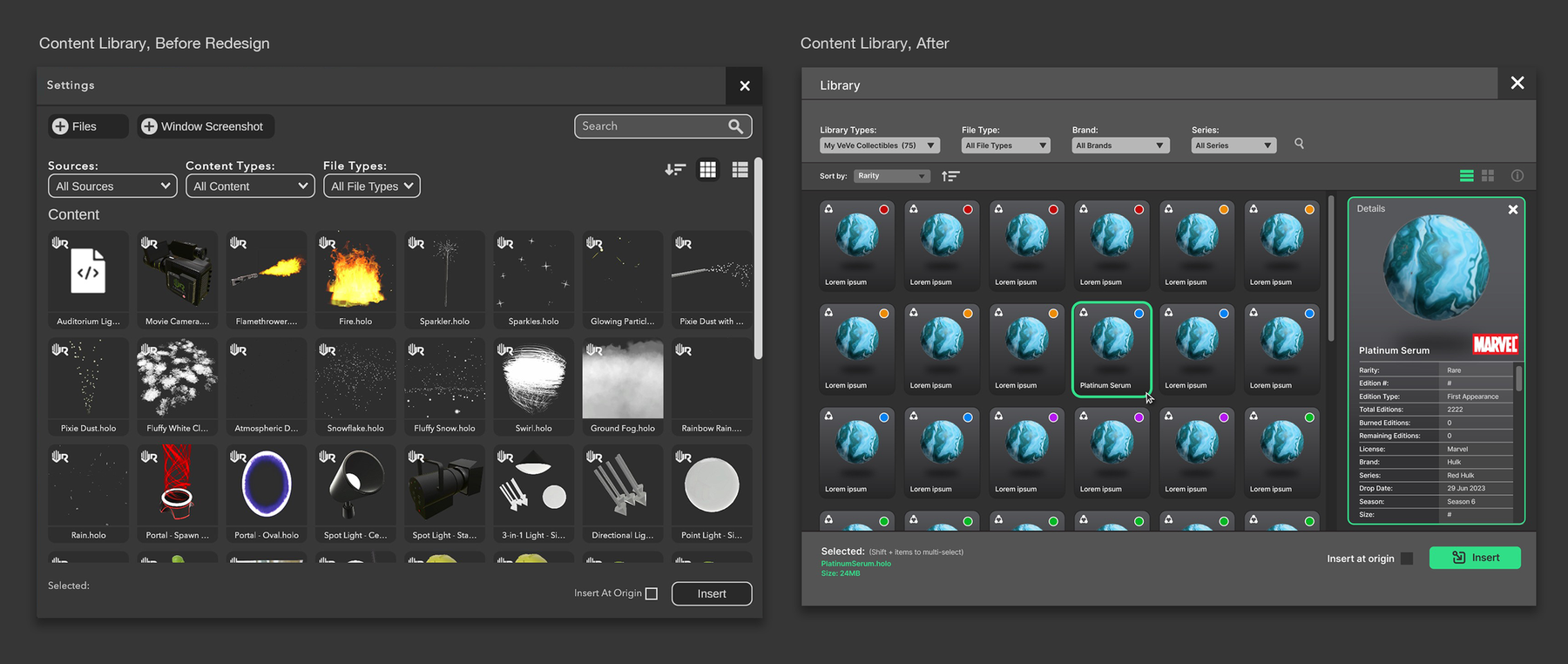
The content library is the conduit by which all content is ingested, stored and shared within the system, always at the ready for use in creating virtual spaces.
The initial functionality of the content library was limited, just waiting for a redesign. I was able to add a more robust and functional feature set including list and tile views, details panel, filtering and sorting, multi-select file data, and an overall cleaner and more hierarchical UX, and a UI design allowing for both dark and light themes, including a consistent content tile background (preventing some content from becoming illegible).
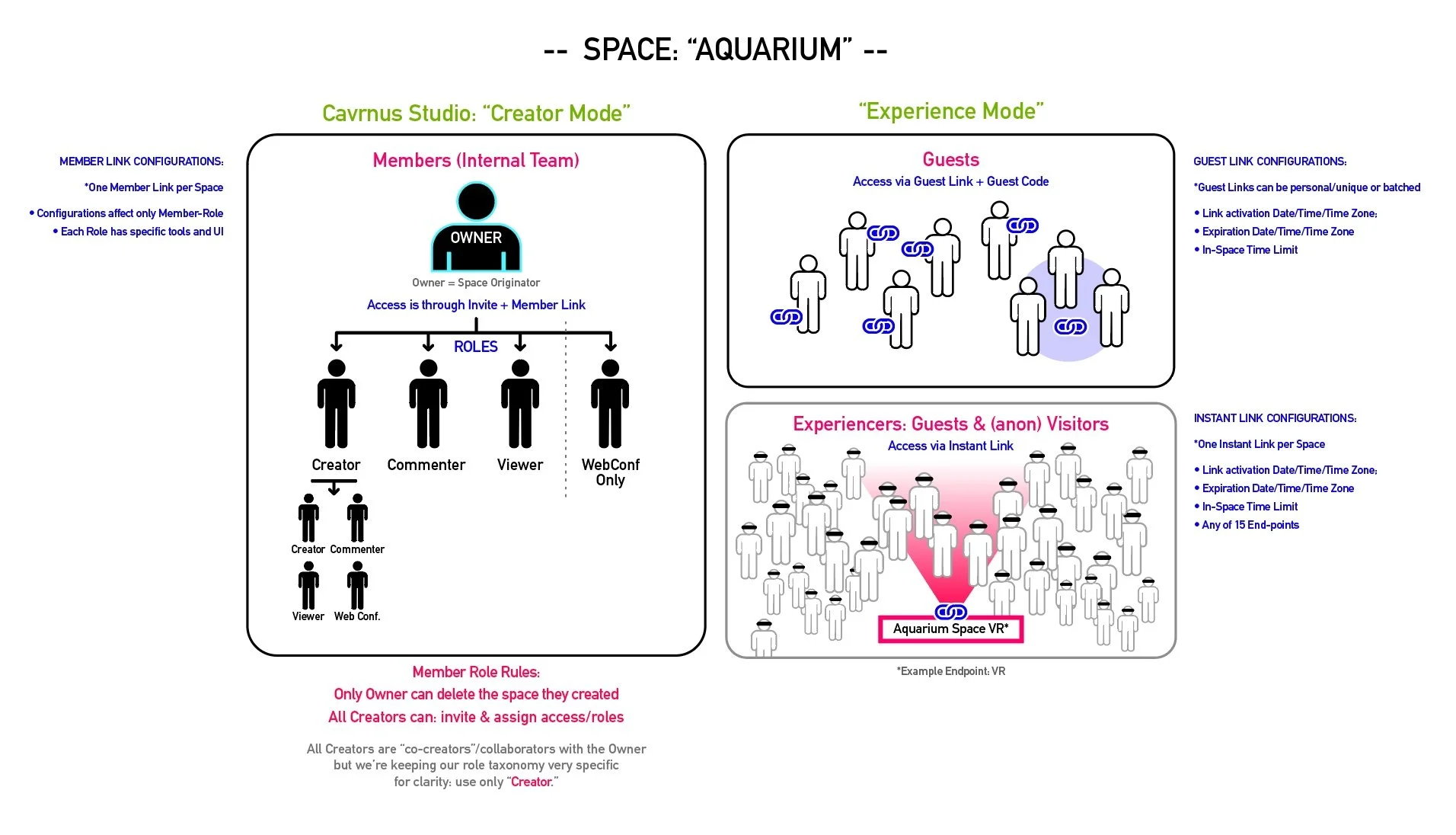
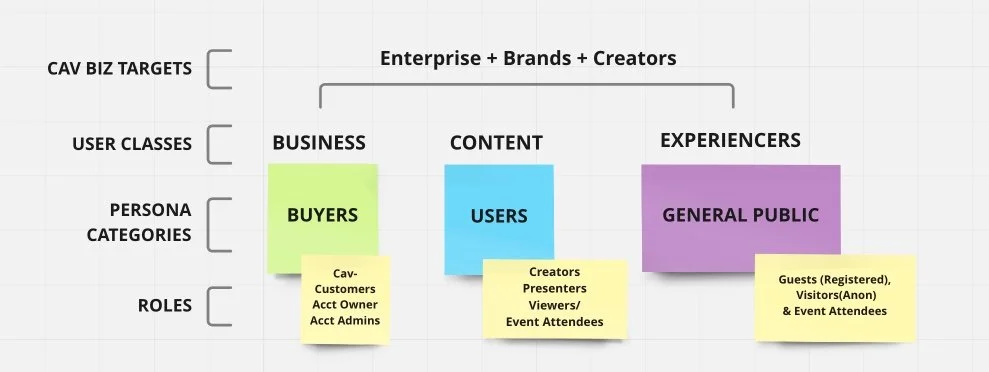
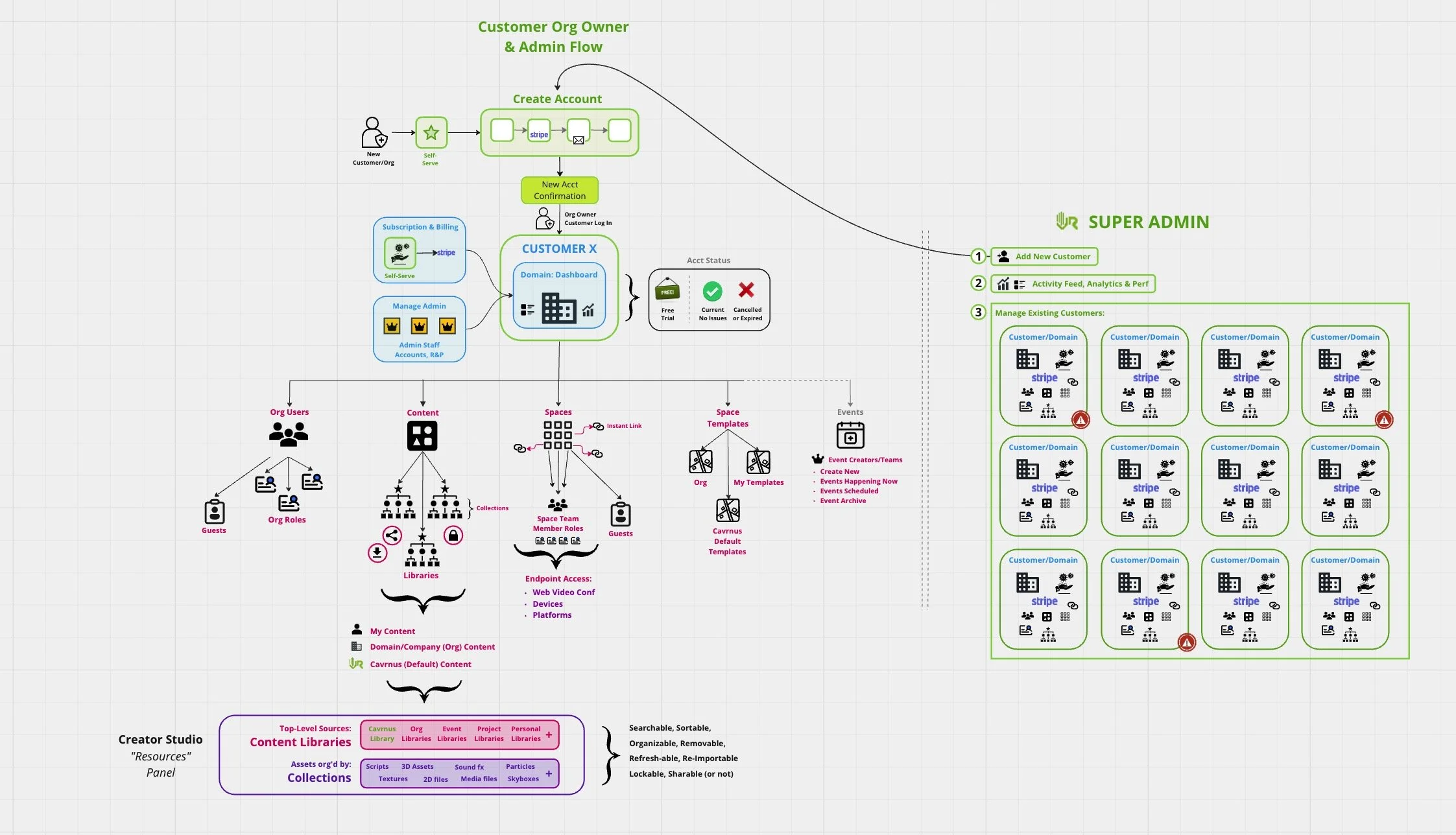
Deceptively simple in appearance, this diagram was one of the most clarifying artifacts of the project. Mapping Cavrnus user types, roles, tasks, and permission-based access limitations across each endpoint proved far more intricate than initially assumed. Sharing this diagram resolved weeks of ambiguity and gave the team a common reference point for every subsequent conversation about roles and permissions.
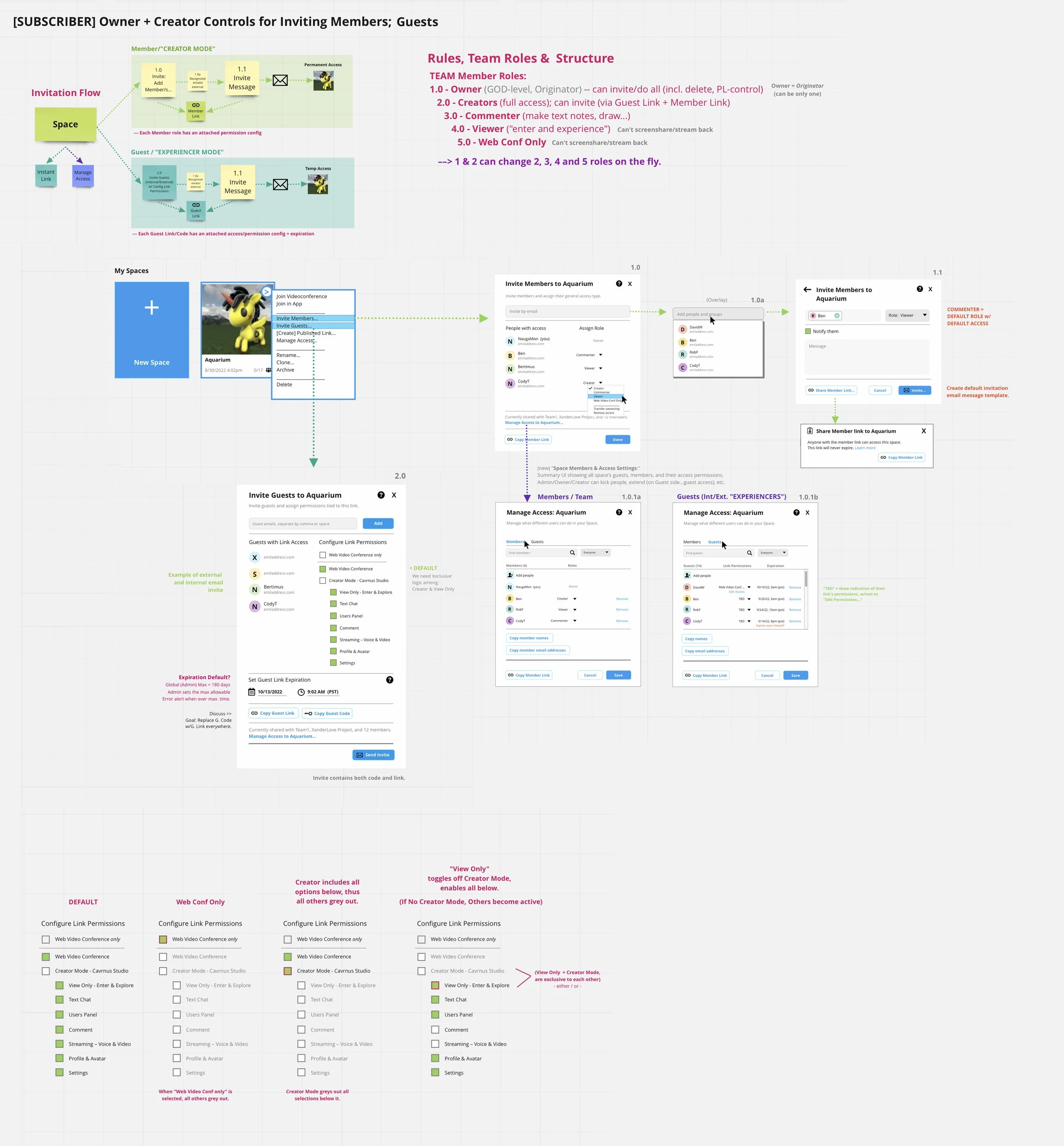
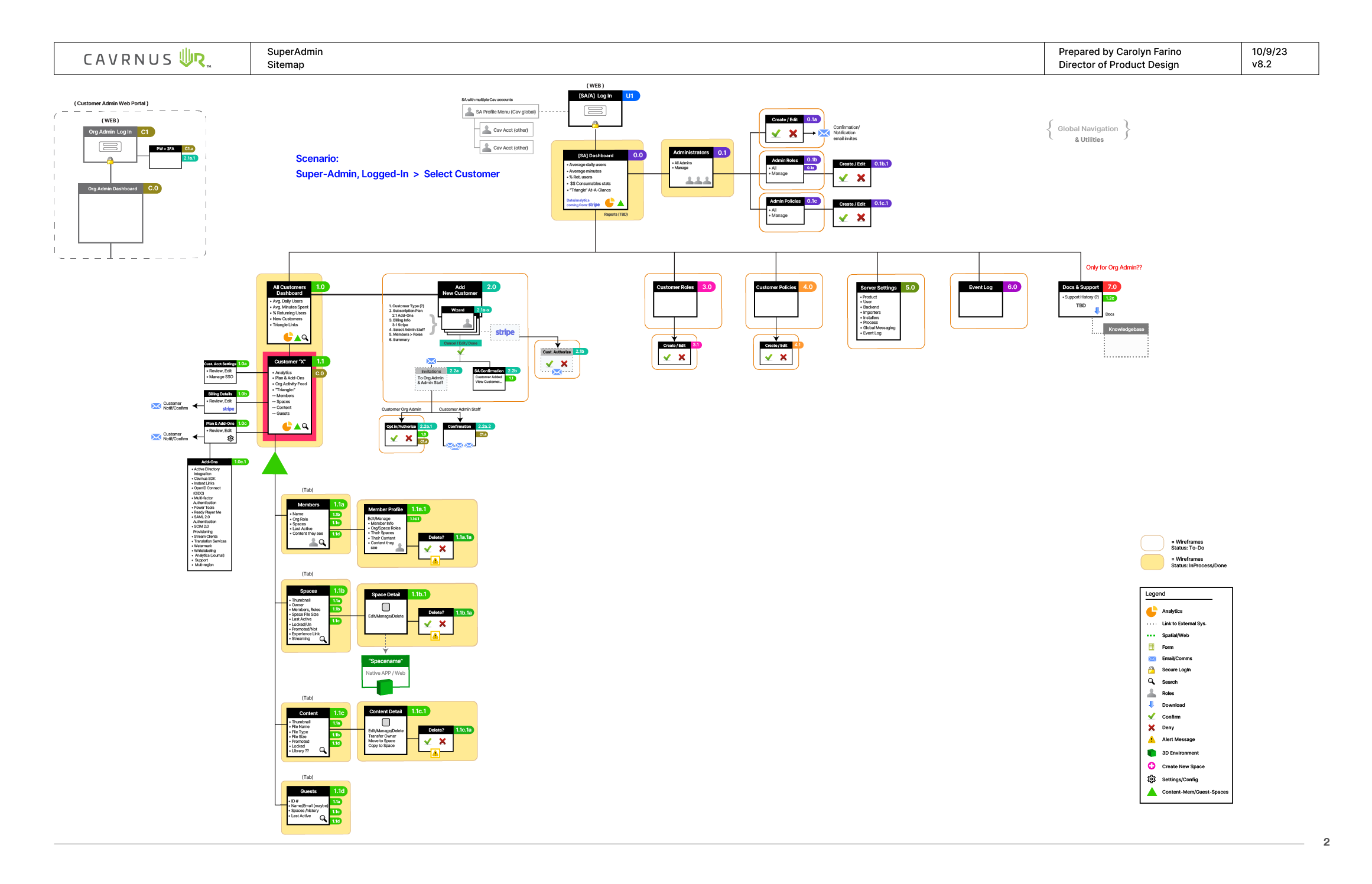
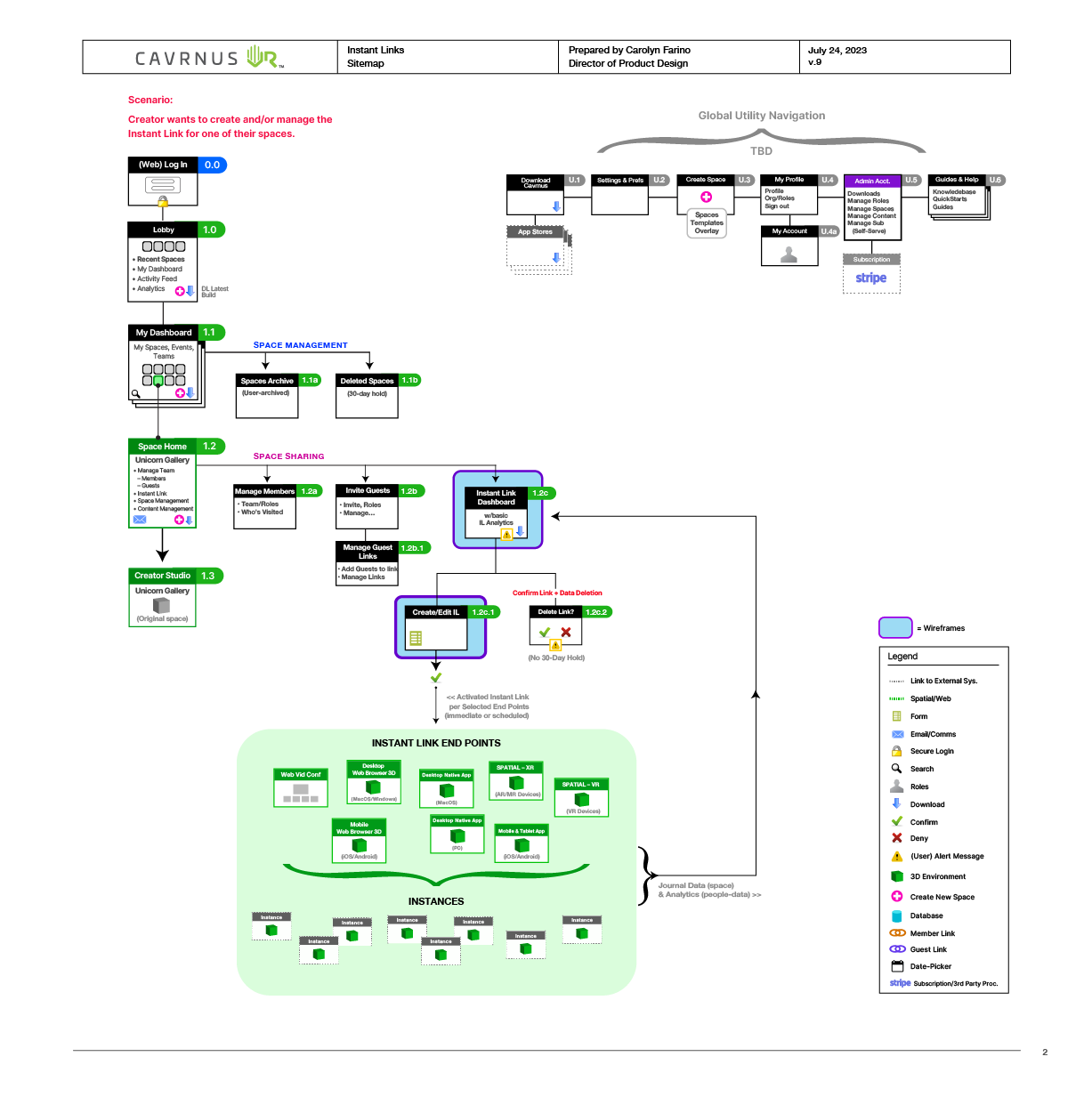
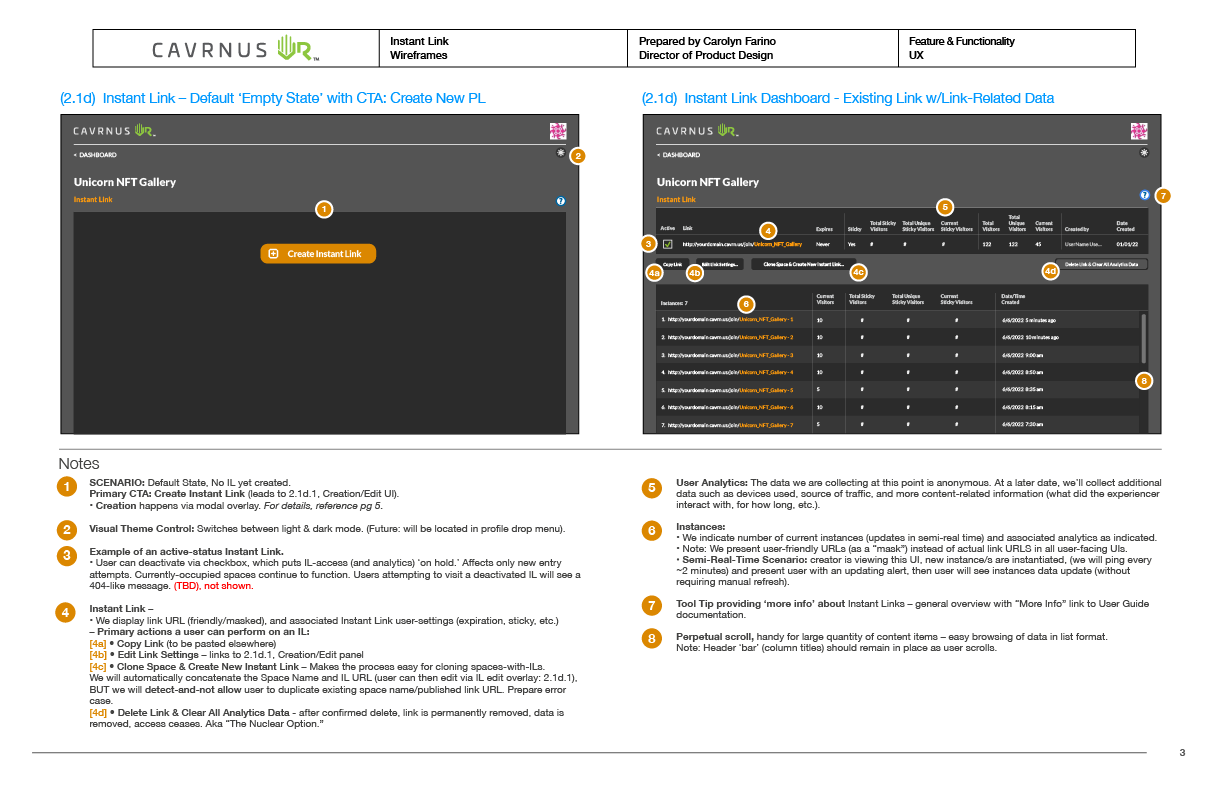
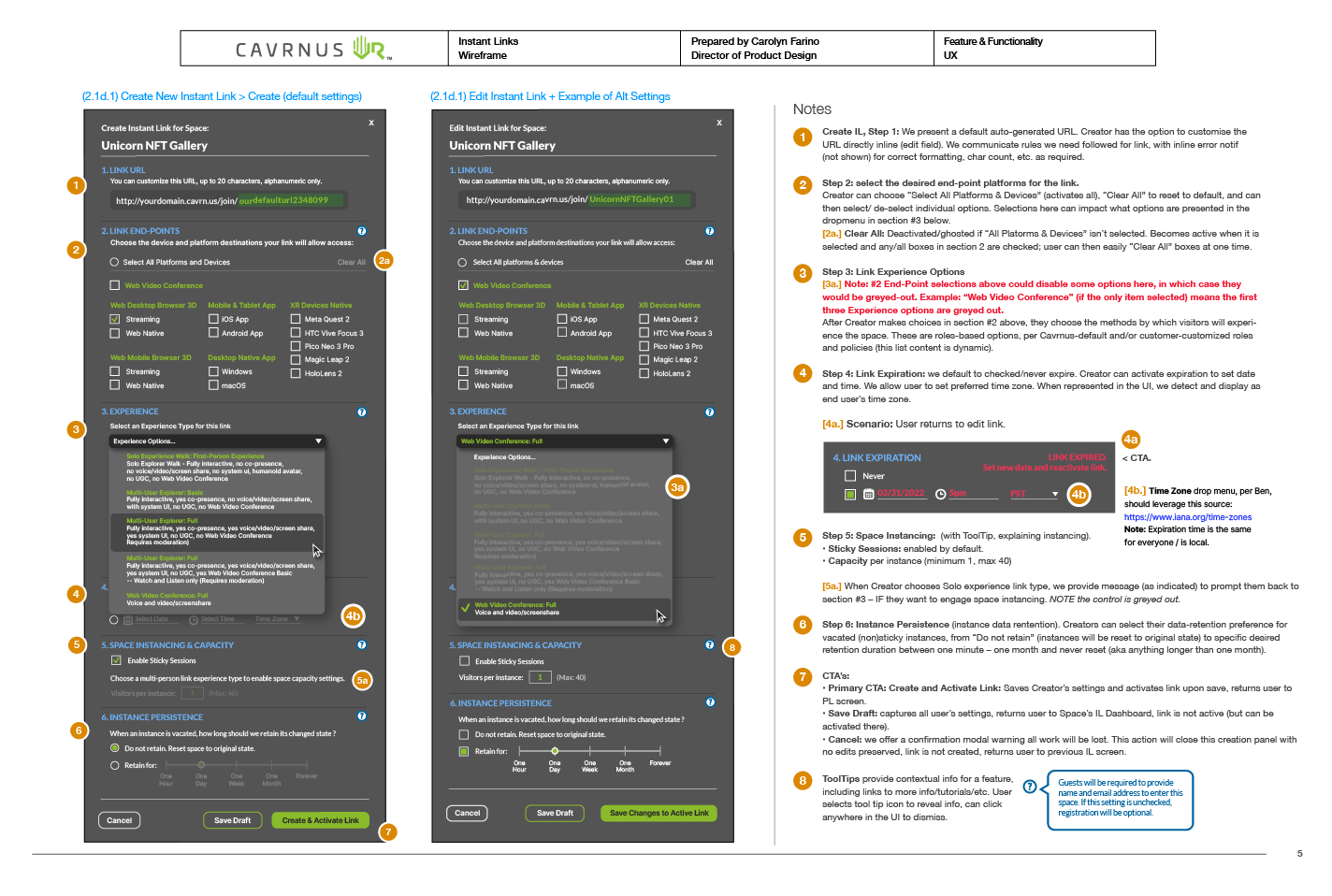
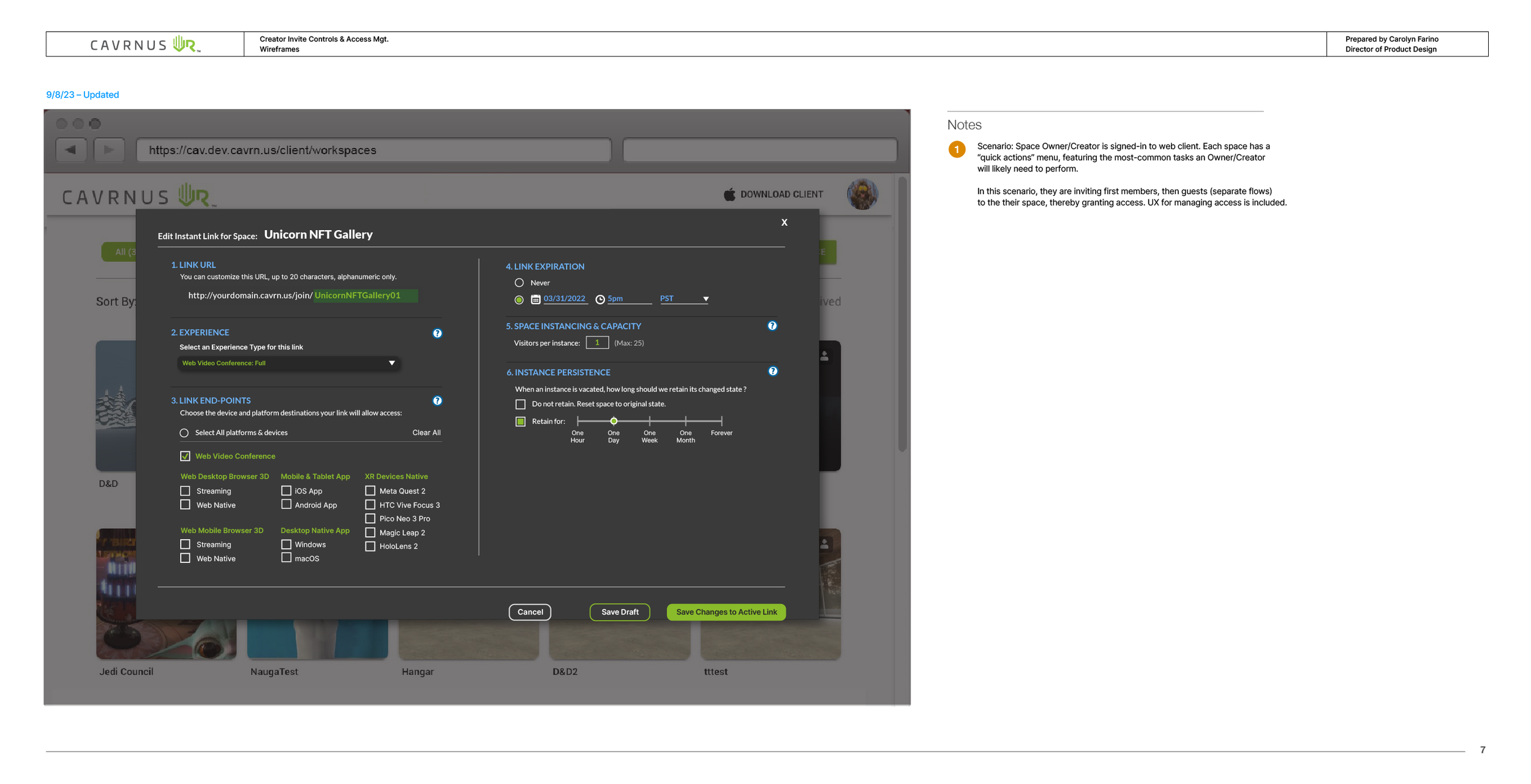
Working real-time in Miro with stakeholders was a great methodology to move feature and functionality development forward. Inviting multiple user types, each with variable roles and permissions, to a space along with management of invitations and invitees after the fact, posed an interesting UX challenge. My solution was embraced by execs and engineering, with its base usability structure and rules implemented elsewhere for other features.
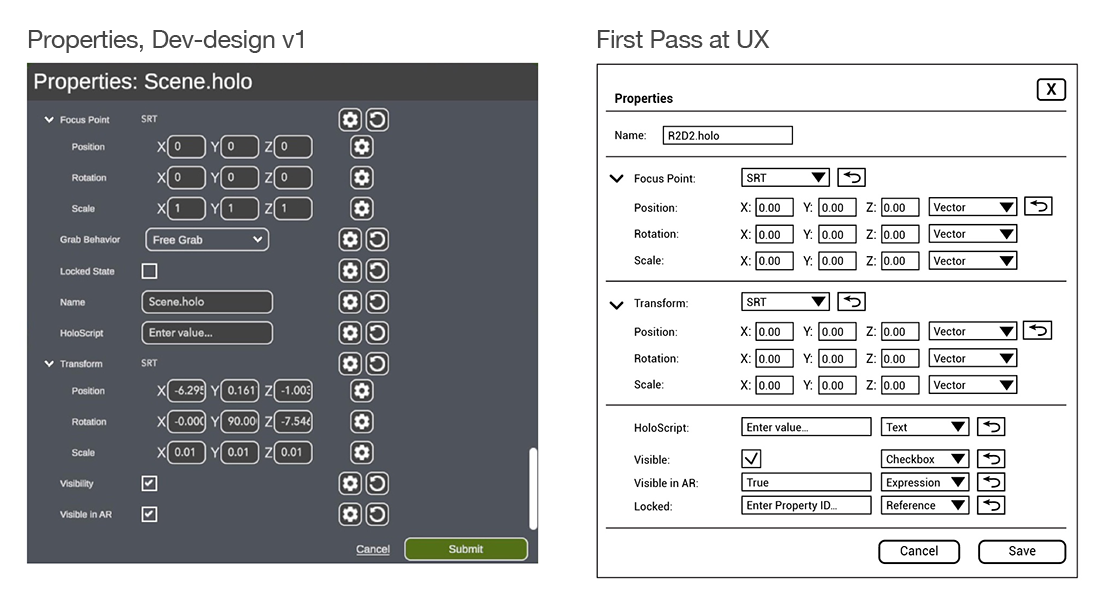
The addition of "Properties" represented a significant expansion of the platform's space-creation toolset. Like all major feature functionality at Cavrnus, it began as a developer proof-of-concept (left): functional, but built for the engineers who authored it. The right panel is my first-pass information architecture: the same system, translated into an experience that makes sense to all Cavrnus users.
This was not standard UX translation from technical to human. I reverse-engineered system logic that wasn't organized around conventional communication, then rebuilt it into something universally navigable.